
The Role of a Drainage Plane
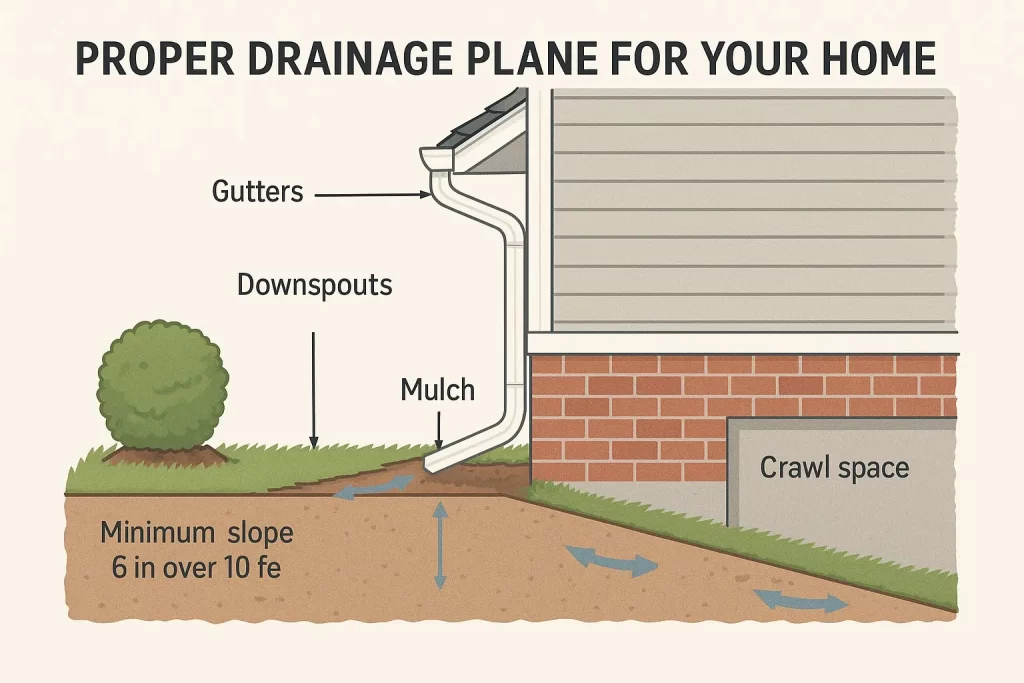
A drainage plane is the system that carries rainwater and runoff away from a home’s foundation. This is not only the slope of the soil, but also the way gutters, downspouts, and landscaping interact with the property. A correctly graded yard with supporting systems prevents moisture from pooling at the base of the structure. This process preserves both soil stability and the long-term strength of foundation walls.
Signs of a Proper Drainage Plane
Several features signal that water is moving in the right direction:
-
The soil around the home slopes away at least six inches over the first ten feet.
-
Downspouts extend several feet away from the structure before releasing water.
-
Mulch and landscaping materials are kept away from siding to avoid trapping moisture.
-
Gutters are clean and free of clogs that could cause water to spill over near the walls.
When all these elements are in place, the risk of soil erosion, cracking, or mold growth drops significantly.
Why Drainage Directly Impacts Foundations
Concrete, block, or pier-and-beam foundations rely on compacted soil for stability. If water saturates that soil, it begins to lose strength. Repeated cycles of saturation and drying cause uneven settling, which leads to cracks. Crawl spaces and basements often show the first warning signs, such as dampness or musty odors.
Excess water always finds a way into weak points. Without a reliable drainage plane, it seeps into small foundation gaps and enlarges them over time. Repairing those conditions can be expensive compared to the simple prevention of proper grading and water redirection.
How Home Inspections Identify Drainage Issues
A drainage plane is not always obvious to homeowners. Professional evaluations highlight problems before they turn into major repairs. A Florida home inspection covers not only the visible structure but also the way water interacts with the property. Inspectors often look for standing water after rain, soil pulled away from the foundation, and evidence of past seepage.
For a clear breakdown of what’s included, visit the list of inspection services offered by specialists. Drainage checks are frequently paired with roof and exterior inspections since the roof is the first line of defense against rain.
The Connection Between Drainage and Local Conditions
Different regions in Florida face unique drainage challenges. Soil composition, rainfall patterns, and local landscaping practices all influence how water moves. This makes home inspection in Tampa slightly different from home inspection in Apollo Beach or St. Petersburg inspections.
-
Tampa neighborhoods often deal with sandy soils that drain quickly but may erode near foundations.
-
Apollo Beach homes close to the water experience high groundwater levels, requiring careful grading and sealed foundations.
-
St. Petersburg properties benefit from thorough evaluations due to higher rainfall and older housing stock in some districts.
Local expertise ensures that drainage plans are practical for the environment where the home sits.
Chart: Common Drainage Problems and Effects on Foundations
| Drainage Issue | Typical Cause | Impact on Foundation |
|---|---|---|
| Standing water near walls | Yard slopes toward house | Soil erosion, foundation settling |
| Overflowing gutters | Clogged with leaves/debris | Water saturates soil near base |
| Short downspouts | Discharge too close | Moisture intrusion into crawl space or basement |
| Landscaping against siding | Mulch/soil piled high | Trapped moisture, wood rot, pest activity |
| Poor grading | Flat or reverse slope | Long-term cracking and shifting |
This chart illustrates how minor oversights in exterior design directly translate into structural problems. Each item on the list has a clear fix, from extending downspouts to re-grading soil.
Case Examples From Florida Communities
-
In Clearwater, many homes sit on lots where the slope has been altered by decades of landscaping. A home inspection in Clearwater often reveals standing water where flower beds have raised the soil against walls.
-
New Port Richey homeowners frequently see evidence of uneven settling. A New Port Richey home inspection can identify those shifts early and suggest adjustments.
-
Trinity properties, some built on former wetlands, are especially vulnerable to drainage problems. Having a Trinity home inspection gives a clear picture of how moisture interacts with the lot.
-
In Brooksville, heavier clay soils hold water for long periods. A Brooksville home inspection often focuses on whether soil grading is sufficient to prevent water retention.
-
Growing suburbs like Wesley Chapel combine new construction with fast-changing landscapes. A Wesley Chapel home inspection ensures builders’ drainage systems continue to function after homeowners add patios, gardens, or pools.
Steps Homeowners Can Take Between Inspections
-
Walk the perimeter after heavy rainfall to check for standing water.
-
Confirm that downspouts extend several feet away and release water downhill.
-
Adjust landscaping features that slope soil back toward the foundation.
-
Keep gutters clean at least twice a year, especially after storm season.
-
Add splash blocks or extensions if water flows too close to walls.
Practical observation goes a long way. Small fixes, such as adjusting mulch depth or moving a flower bed border, can redirect hundreds of gallons of water over a season.
When to Contact a Professional
Some drainage problems require more than DIY adjustments. Soil grading, French drains, or sump pumps may be necessary. Reaching out to an inspector helps determine whether the problem is cosmetic or structural. The easiest way is through a direct contact page where appointments can be scheduled.