
At Strictly Septic, we pride ourselves on offering tailored on-site wastewater solutions across rural and semi-rural areas. While conventional septic systems with leach fields (drain fields) often work well, there are many cases where soil, space, topography, or regulatory constraints make that option impractical.
That’s where holding tank systems come in. In this article, we’ll walk you through exactly what a holding tank system is, how it compares with traditional septic systems, when and why we install them, what’s involved in their upkeep, and how Strictly Septic handles design, installation, maintenance, and pumping. If you want to see our full suite of offerings, check out our page on Septic Company Services. For deeper technical detail on holding tank systems, you can also visit our page on Holding Tank Systems.
What Is a Holding Tank System?
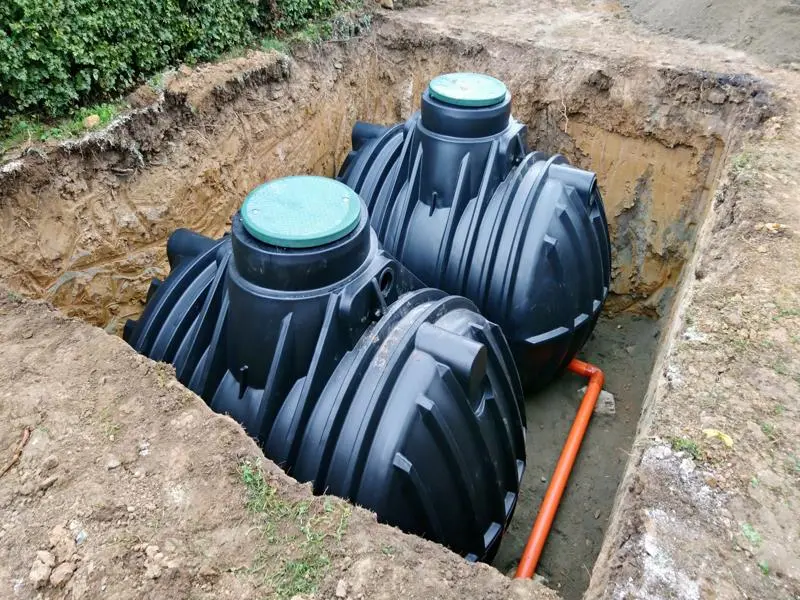
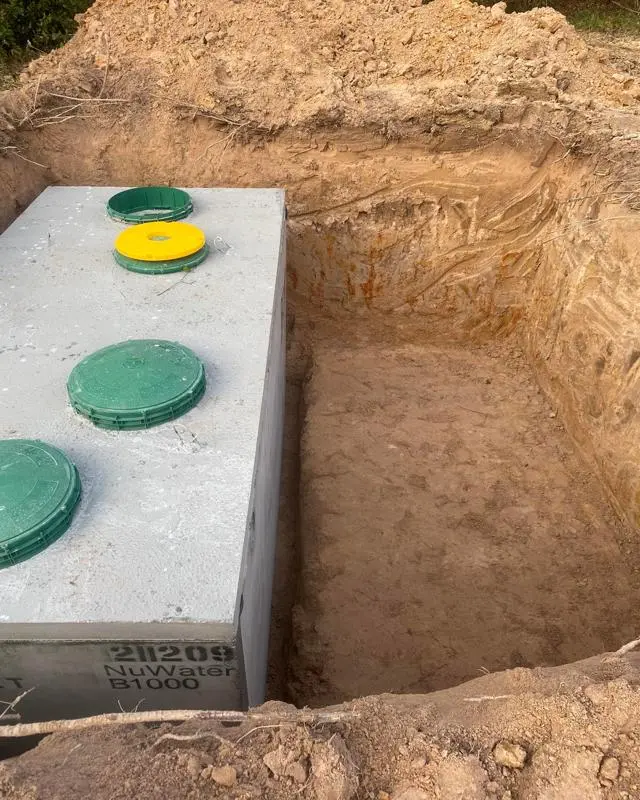
A holding tank system is a sealed, watertight vessel that temporarily stores all wastewater from a property. Unlike a septic tank plus leach field, the holding tank does not discharge effluent into the soil. Instead, the waste is held until it can be safely pumped out and transported to a permitted treatment facility or disposal site.
Key characteristics:
-
Completely sealed: no soil absorption (no leach field).
-
Requires pumping at intervals: as the tank fills, scheduled service is necessary.
-
Ideal for constrained sites: properties where soil percolation is poor, space is limited, or local codes disallow standard systems.
Because the tank is sealed and does not leach out, all solids and liquids remain contained. That means you must manage the volume coming in and ensure regular service so it does not overflow or become a health hazard.
Holding tanks are sometimes called cesspools or cesspits in other contexts, but in modern terms they’re best understood as sealed containment systems. (In the UK, for example, a “cesspit” often refers to what we’d call a holding tank.)
When Is a Holding Tank the Right Solution?
We often find that a holding tank system makes sense in the following scenarios:
-
Unsuitable soil or high groundwater
If a percolation (perk) test reveals that the soil is too clayey, dense, or has poor drainage—or the water table is too close to the surface—a standard leach field may fail. In such cases, a holding tank is safer and more reliable. -
Tiny lots or constrained space
Some lots are too small to support the required area of drain field or too rugged/steep to trench. A holding tank can solve that spatial challenge. -
Interim or temporary use
If a building or residence is temporary, or if full system installation is delayed, a holding tank may be installed as an interim solution. -
Strict regulatory or environmental restrictions
In areas near bodies of water, wetlands, or where local code prohibits soil discharge, a holding tank may be a code-compliant option. -
Remote or off-grid properties
Some remote homes or cabins cannot access municipal sewer or cannot support a drain field; a holding tank gives a contained, manageable solution.
Because a holding tank cannot self-dispose the waste, maintenance and pumping costs are part of the calculus, and homeowners must commit to scheduled service.
How a Holding Tank System Works: Key Components & Mechanics
From a user’s standpoint, here’s what happens:
-
Inlet plumbing
Wastewater from the home — from toilets, sinks, showers, laundry, etc. — flows into the holding tank through the inlet pipes. In many designs a small septic intercept (solids separation chamber) may precede the main tank. -
Internal separation and storage
Inside the tank, heavier solids settle to the bottom and lighter scum (oils, grease) float upward. The mid-level liquid zone holds most of the wastewater. Because the tank is sealed, gases may build, so a vent is provided to allow safe air movement. -
Alarm or level sensor
Many modern holding tanks incorporate a high-level alarm or sensor that notifies the owner/contractor when the tank is nearing capacity. This helps prevent overflow or backup. -
Pumping outlet
When the tank approaches its allowable fill level, a qualified technician (usually us) comes to pump the contents out via vacuum truck or pump system. The waste is then transported to a permitted treatment facility or disposal site. -
Access risers and lids
The tank is installed with access lids or risers to grade, allowing the service technician to access the interior for cleaning, inspection, and pumping.
Because the system holds everything, it is crucial to ensure that the tank is sized properly, vented appropriately, and maintained diligently.
Benefits & Drawbacks Compared to Traditional Septic
Benefits
-
Simplicity and predictability
The system has fewer parts (no leach field, fewer lines), which reduces points of failure. -
Suitable for challenging soil or terrain
It works where leach fields would fail or be impractical. -
No risk of soil contamination
Because nothing is absorbed into the ground, there’s less risk of contamination of nearby soils or groundwater. -
Easier to upgrade or relocate
Because you’re not tied to a fixed drain field layout, future changes may be more manageable.
Drawbacks
-
Ongoing maintenance cost
You must pump and service regularly, which means recurring expenses (sometimes every few weeks to months, depending on size and usage). -
Capacity constraints
If usage is high, the tank may fill quickly, so correct sizing is critical. -
Potential odor or backup risk
If the venting or pumping schedule fails, odors or backups are possible. -
Not a “set it and forget it” system
The owner must be proactive in scheduling routine pumping and inspections.
How Strictly Septic Designs & Installs Holding Tank Systems
At Strictly Septic, we approach every holding tank project with care, tailoring the system to the site, usage, and local regulations. Here’s our process:
Site Evaluation & Permitting
-
We begin with soil testing, percolation tests, and site surveys to determine if a holding tank is appropriate.
-
We examine local codes and discharge permits, because in many jurisdictions, even holding tanks must adhere to regulations.
-
We plan for access by service vehicles and design routing for pumping lines.
Tank Sizing & Design
-
We estimate daily wastewater generation based on number of bedrooms, plumbing fixtures, and expected usage.
-
We then choose a safety factor to avoid overfilling and to allow for peak loads.
-
We design venting, alarms, risers, lids, and inlet/outlet piping.
-
We may offer a dual-chamber or compartmentalized tank to help settle solids and reduce carryover of solids to the pump out.
Excavation & Installation
-
We excavate a suitable hole to accept the tank, ensuring proper depth, bed support, and backfill material.
-
We place concrete pads or bedding to stabilize the tank and avoid shifting.
-
We connect inlet plumbing from the structure, vent piping, and access risers/lids to grade.
Start-Up & Testing
-
We test for leakage, venting, and proper flow.
-
We fill the tank partially with water to check for buoyancy or floatation under groundwater conditions.
-
We train the property owner in alarm interpretation, access lid operation, and best use practices.
Commissioning & Scheduling Maintenance
-
We schedule the first pumping date and establish a maintenance plan.
-
We may monitor levels (manually or via sensors) to adjust frequency.
-
We provide documentation for the permit authority or local health department.
Because we also offer a full range of septic services, you can rely on us for any needed repairs, upgrades, or full system replacements. See our Septic Company Services for everything we do beyond holding tanks.
Typical Maintenance & Pumping Program
A holding tank is only as good as its maintenance. Here’s what we consider standard practice:
-
Pumping frequency
Depending on tank size and usage, this may range from every few weeks to perhaps once every several months. Especially in heavy-use properties, more frequent scheduling is prudent. -
Inspection every pump-out
We check the interior walls, inspect for cracks or infiltration, measure sludge and scum accumulation, verify sensors and alarms, and clean as needed. -
Alarm maintenance
If a high-level alarm or float is installed, we test and calibrate it at each service to ensure reliability. -
Record keeping
We log volumes pumped, dates, and observations. These records help adjust future schedules and serve as documentation for regulators. -
Odor control and degassing
If needed, we may recommend deodorizers or vent line improvements to manage fumes. -
Emergency response
If the tank overfills or backs up unexpectedly, we respond promptly to avoid health hazards or property damage.
We aim to make the upkeep as seamless as possible, and many of our clients subscribe to our regular service agreements so there’s no guesswork on when we’ll service your system.
What Clients Should Know & Best Practices
To get the most out of your holding tank system, here’s what we counsel all our clients:
-
Conserve water usage
Because every gallon goes into the tank, conservative habits prolong your pump-out schedule. -
Avoid harsh chemicals
Do not pour strong solvents, acids, or excessive bleach into the system. They can damage sensors, interfere with biological breakdown, or corrode components. -
No solids beyond human waste and toilet paper
Do not flush items like feminine hygiene products, wipes, or grease—they accelerate filling and block drains. -
Monitor for leaks or signs of backup
If alarms beep, water backs up, or odors arise, call us immediately. -
Maintain vegetative cover, but avoid heavy loading above tank
Do not drive heavy vehicles over access lids or risers—protect structural integrity. -
Stay compliant with local regulations
Some jurisdictions mandate inspection logs, periodic reporting, or facility discharge permits after pumping.
By staying proactive, the system should serve reliably for many years.
Common Challenges & How We Solve Them
Over the years, we’ve encountered and solved a range of challenges in holding tank installations:
-
Groundwater pressure
In high water table zones, tanks may tend to float. We counter this via ballast or tie-downs and proper backfill design. -
Odor or venting issues
Sometimes vent stacks are too small or poorly located. We redesign vent paths, add filters, or reposition vent terminations. -
Access difficulties
Some sites have steep, rocky, or tight access. We bring in specialized equipment, design long pump lines, or install remote access risers. -
Alarm failures or sensor drift
We use high-quality float switches or electronic sensors and calibrate them regularly, replacing parts before they fail. -
Sudden load changes
If the property expands (e.g. extra bathrooms), we reassess capacity and may upgrade to a larger tank or install supplementary storage capacity. -
Permit or regulatory revisions
We stay current on county and state regulations and help clients navigate inspections, reporting, and compliance.
Whenever you run into an issue, we bring both experience and responsiveness to correct it.
Comparing Costs & ROI
While installing a holding tank may have a higher per-gallon cost than a basic septic tank, the offset is that you avoid trenching, drain field piping, and soil treatment costs. You also gain the flexibility to install where soil or layout would forbid a conventional system.
The ongoing cost is in pumping and maintenance. When we quote a holding tank job, we always include projected yearly servicing costs so clients see the true life-cycle cost, not just upfront.
In many cases, for remote or difficult lots, the holding tank is the only feasible path, making it an investment in viability rather than compromise.
Why Choose Strictly Septic?
When you partner with Strictly Septic, you’re choosing:
-
Experience in septic and alternative wastewater systems
We know both holding tanks and full septic systems intimately. -
Local knowledge
We are familiar with Soil types, groundwater, permitting, and county health requirements in our region. -
End-to-end service
From design and permitting to installation, start-up, maintenance, and emergency service — we handle it all. -
Customer-first approach
We provide clear quotes, documentation, and planned maintenance schedules so clients know exactly what they’re getting. -
Accountability and reliability
We stand by our systems and respond quickly if issues arise.
If you’re not sure whether a holding tank or a more conventional system is right for your property, we’re always happy to evaluate options with you and explain the trade-offs.
Frequently Asked Questions (FAQ)
Q: How often will you need to pump my holding tank?
A: That depends on the size of the tank and how much wastewater you generate. It could range from as often as every few weeks to several months. During startup, we monitor usage and adjust the schedule.
Q: Will the tank leak or pollute the soil?
A: No — the tank is sealed and watertight, so no effluent seeps into the soil. That’s one advantage over leach fields in poor soil.
Q: What if the power goes out and my sensor alarm doesn’t function?
A: Some systems include battery backup or dual float systems for redundancy. We design critical installations to minimize failure risk.
Q: Can I convert a holding tank later to a full septic system?
A: In many cases, yes. If site conditions permit and funding allows, we can adapt or expand the system.
Q: What about odors?
A: Proper vent sizing and placement, glazed internal walls, and occasional deodorizing additives help keep odors minimal. In nearly all cases, users don’t notice them.
Q: Is the holding tank covered by warranties?
A: Yes. We provide warranties on workmanship and tank integrity, and we guarantee performance when properly maintained.
Conclusion
A holding tank system is a powerful, flexible, and reliable solution when traditional septic systems aren’t viable. At Strictly Septic, we approach each project with site-specific design, quality installation, and a proactive maintenance plan. We believe every customer deserves a safe, compliant, and low-stress wastewater system, whether that’s a holding tank, a drain field system, or another configuration.
If you’re considering a holding tank, or just want to understand all your options, get in touch with us. We’ll walk you through the planning, design, cost, and long-term service commitment — no pressure, full transparency.
To view our broader offerings, check out our page on Septic Company Services. And if you want to dive deeper into what holding tank systems involve, here’s more detail on our dedicated page: Holding Tank Systems.
Let Strictly Septic bring you wastewater solutions you can count on — whether under soil, under slab, or in a secure holding tank.