Welcome to Davis Tree Service, your local expert arborists serving Montgomery County and surrounding areas. At Davis Tree Service, we understand that Texas’s climate presents unique challenges for maintaining healthy trees and performing safe tree removal. In this article, we’ll explain how dry conditions in Texas stress trees, when removal is necessary, and how our process ensures safety, reliability, and long-term landscape health.
Why Tree Removal Matters
Trees are among the most valuable assets on your property—they provide shade, beauty, energy savings, habitat, and increased property value. But sometimes tree removal becomes the safest, most responsible choice. At Davis Tree Service, we help home and business owners make informed decisions about tree removal while balancing safety, cost, and environmental responsibility.
Tree removal is not just “cutting something down.” It must be done with planning, safety measures, and awareness of local site conditions, especially during times of drought. In dry climates, removing a failing or hazardous tree promptly can prevent damage to structures, power lines, and surrounding vegetation.
If you’d like to review all of our services, please visit our Services page to see how tree removal fits into our broader tree care offerings, from trimming and pruning to emergency services.
How Dry Conditions in Texas Affect Trees
Texas is no stranger to drought. Prolonged periods of below-average rainfall strain trees across the state, and the effects can linger long after rain resumes. Extended drought periods are especially hard on trees, often causing delayed damage that may not be visible until months or even years later.
When water is scarce, trees go into survival mode. The most vulnerable roots—those near the surface—often die first, sharply reducing a tree’s ability to absorb water and nutrients. Stomata close to conserve moisture, which reduces photosynthesis and weakens the tree’s energy reserves. Even after rainfall returns, trees may carry stress for years because they must regrow lost root systems.
Drought-stressed trees are also more vulnerable to pests and disease. Weakened defenses give wood borers, canker pathogens, root rots, and fungi easy access. Severe drought can lead to hydraulic failure, where air bubbles block water flow in the tree’s system, leading to dieback or sudden death. And because some trees appear healthy before ultimately succumbing to stress, delayed mortality is a common challenge in Texas landscapes.
Not all species respond equally to drought. Oaks, elms, junipers, and other hardwoods may suffer more quickly, while some pines or drought-tolerant natives resist longer. Diseases like oak wilt can exploit drought-weakened trees and rapidly spread through root grafts, making removal a critical step in protecting neighboring trees. In Texas’s dry environment, trees with deep root systems or drought-adapted physiology fare better, but even resilient trees must be monitored during extended dry spells or heat waves.
Warning Signs That a Tree May Need Removal
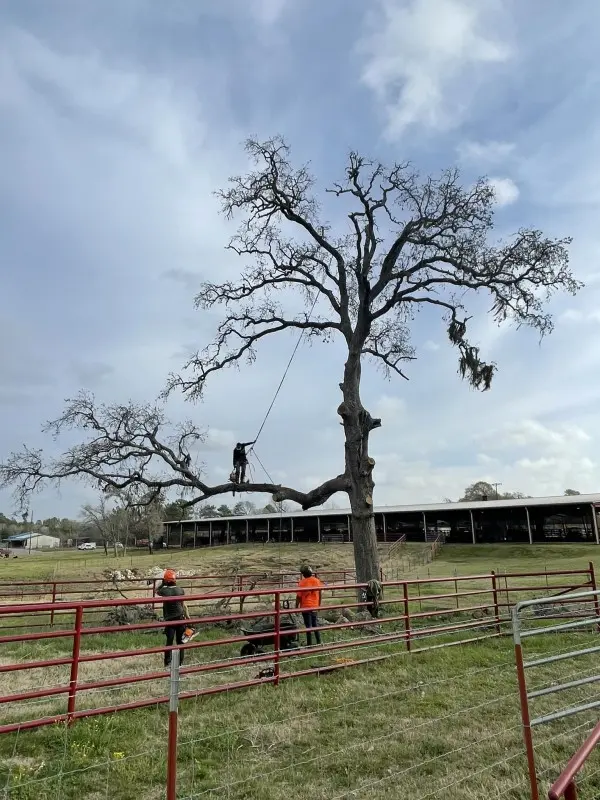
Dry stress can mask or accelerate signs of structural or health failure. At Davis Tree Service, we look for multiple red flags when assessing whether a tree should be removed.
Visible symptoms of severe stress or decline include foliage browning, premature leaf drop, sparse canopy, dead branches, trunk cracks, bark loss, fungal growth, or leaning. If roots are exposed or soil is heaving around the base, it can indicate root failure—a major safety concern.
Safety risk factors also play a big role in our assessments. Trees leaning toward houses or power lines, encroaching over sidewalks, or showing weak branch attachments can quickly turn hazardous during storms or wind events.
Pest and disease infestations are another warning sign. Insect galleries under bark, fungal conks on roots or trunks, and visible rot are strong indicators of internal decay that can’t always be reversed.
When one or more of these conditions are present and pose danger, we recommend removal rather than attempting risky rescue pruning. In drought-stressed conditions, the margin for surprise failure is narrower. Dead wood is more brittle, hollows are more likely, and decay can accelerate quickly.
Our Tree Removal Process
At Davis Tree Service, we follow a detailed, safety-first approach to remove hazardous or unwanted trees. Every project is carefully planned to protect your property and our crew.
Site Inspection and Assessment
We begin with a free estimate and property visit to evaluate species, structure, site constraints, and risk. We examine the tree’s health using crown, bark, root, and surrounding soil indicators, and assess nearby structures and obstacles. We then determine whether selective removal, full removal, or partial dismantling is best.
Planning and Safety Setup
We identify the fall zone, set up safe removal routes, cordon off the area, and coordinate with utility providers when needed. Proper rigging, ropes, and safety gear are used to minimize risk to your property.
Dismantling the Tree
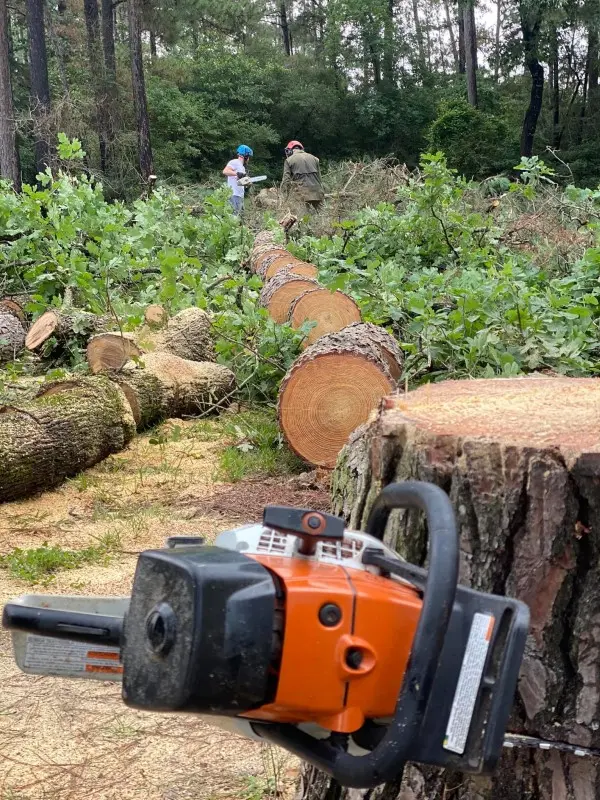
Most removals, especially in residential areas, require dismantling the tree piece by piece. We remove major limbs first, lowering each section safely using ropes or cranes as needed. This controlled approach avoids damage to structures, fences, or landscaping.
Trunk Removal and Stump Work
Once limbs are removed, the trunk is cut into manageable sections. Customers may choose stump grinding or full root removal, depending on their landscaping plans. We can leave a clean finish or rough grade, ready for future planting or construction.
Cleanup and Final Inspection
We rake, chip, and haul away wood and debris as agreed. The site is swept and inspected to ensure safety and cleanliness. Our goal is to leave your property looking neat and hazard-free.
Post-Removal Care and Restoration
Tree removal is often the beginning of a landscape’s renewal. After a tree is removed, we help homeowners prepare the soil for future planting and ensure the area remains stable and healthy.
Soil rejuvenation is key. After stump removal or grinding, we may recommend aerating the soil, adding compost, and applying mulch to restore moisture and structure.
Strategic planting comes next. Replacing a removed tree with a drought-tolerant or native species ensures your landscape remains resilient. Selecting the right species for Texas’s dry conditions can prevent future removals.
Ongoing maintenance ensures long-term success. Regular inspections, proper watering schedules, and preventive pruning can help new plantings thrive, even through future droughts.
Preventive Care for Trees in Drought-Prone Texas
While removal is sometimes necessary, preventive care is the best way to protect your trees before they reach a critical point.
Supplemental Watering
During drought, even mature trees need help. Deep watering through soaker hoses or drip lines encourages strong root growth. Watering in early morning or evening minimizes evaporation, helping trees get the moisture they need without waste.
Mulching
A proper mulch layer—kept a few inches away from the trunk—helps retain soil moisture, moderate temperature swings, suppress weeds, and improve soil over time.
Prudent Pruning
During dry conditions, we recommend pruning only as needed to reduce stress. Removing dead or weak limbs improves tree structure and reduces water demand.
Pest and Disease Management
Drought-weakened trees attract pests and pathogens. Regular checks can help catch problems early, before they spread or cause irreversible damage.
Regular Arborist Inspections
Annual or biennial inspections by certified arborists can detect declining vigor, root stress, and other early warning signs. Addressing issues early is more cost-effective than emergency removals later.
Why Choose Davis Tree Service
At Davis Tree Service, we bring local experience, expert care, and a commitment to safety to every job. Here’s what sets us apart:
-
Licensed, insured, and professional
-
Certified arborist oversight on every project
-
In-depth knowledge of Texas tree species and drought patterns
-
Full-service offerings, from removal and stump grinding to trimming and emergency response
-
A safety-first, property-protecting approach
-
Transparent pricing with free estimates
-
Deep roots in the local community
We proudly serve Montgomery County, TX and the surrounding areas with dependable tree care you can trust. For a complete overview of what we offer, visit our Services page.
Frequently Asked Questions
Can a drought-stressed tree recover, or should I remove it right away?
Many trees can rebound after rainfall and care, but if a tree shows signs of structural weakness or disease, it’s safer to remove it.
Is it more expensive to remove trees in drought conditions?
Sometimes. Drier wood is more brittle, requiring more careful handling. However, removing hazardous trees before they fail can save significant costs later.
How soon after removal can I replant?
Often within months. Preparing the soil properly and selecting drought-tolerant species ensures the best long-term results.
Do local rules restrict tree removal?
Some municipalities require permits or tree preservation plans. We can help navigate these requirements.
When is the best season for removal?
Tree removal can be done year-round, but cooler seasons often offer ideal soil and weather conditions. Hazard removals are handled immediately.
How do I know your crew is qualified?
Our team follows ANSI safety standards, uses professional equipment, and operates under certified arborist leadership. We carry insurance and work transparently.
Final Thoughts
Tree removal in Texas’s challenging climate requires skill, planning, and respect for the environment. At Davis Tree Service, we combine expert knowledge of local conditions with proven arboricultural practices to protect your property and landscape.
If you suspect a tree is weak, dying, or hazardous—or if you simply want a professional inspection—reach out to us. Let our team help you make informed decisions about removal or preservation, especially during drought-stressed conditions.
Learn more about our company at Davis Tree Service and explore all the ways we can support your property on our Services page. Together, we can keep your landscape healthy and safe, no matter how dry the Texas weather gets.