Understanding Epoxy Flooring: An Overview
Epoxy flooring has become a preferred choice for residential, commercial, and industrial spaces due to its durability, versatility, and visual appeal. At Epoxy Garage Floors Montgomery, property owners can explore a range of epoxy solutions tailored to various needs. One of the standout features of epoxy flooring is its non-slip properties, making it a safe option for areas prone to moisture and heavy foot traffic.
What is Epoxy Flooring?
Epoxy flooring is a surface system created by applying multiple layers of epoxy resin onto a floor. The result is a seamless, hard-wearing surface that can withstand significant wear and tear. Epoxy is a thermosetting polymer, which means it cures and hardens when mixed and applied. This process results in a chemical bond both with the substrate and within the epoxy itself, creating a robust flooring system.
Key Components of Epoxy Flooring
- Epoxy Resin: The main component responsible for hardening and adhesion.
- Hardener: Reacts with the resin to initiate the curing process.
- Additives: Used for color, texture, and non-slip properties.
The Importance of Non-Slip Properties in Flooring
Slips and falls are a leading cause of injuries in homes and workplaces. Non-slip flooring reduces the likelihood of such accidents, especially in environments exposed to water, oil, or chemicals. Epoxy flooring, when formulated with non-slip additives, offers a textured surface that enhances traction without compromising on aesthetics.
How Epoxy Flooring Achieves Non-Slip Properties
The non-slip characteristics of epoxy flooring are achieved through several methods. The primary approach involves incorporating aggregate materials or textured finishes into the epoxy system. These additions create a micro-rough surface that increases friction underfoot.
Common Non-Slip Additives
- Silica Sand: Mixed into the topcoat for a fine, gritty texture.
- Aluminum Oxide: Provides a durable, abrasive finish suitable for industrial applications.
- Polypropylene Beads: Used for a less abrasive, yet effective, non-slip surface.
- Vinyl Flakes: Enhance traction while adding color and design options.
Slip Resistance Ratings
Slip resistance is often measured using the coefficient of friction (COF). A higher COF indicates better slip resistance. Epoxy floors with non-slip additives typically achieve COF values suitable for both residential and commercial safety standards.
Benefits of Epoxy Flooring’s Non-Slip Properties
- Safety: Reduces the risk of slips and falls in wet or oily conditions.
- Customizable Texture: The level of slip resistance can be tailored to the environment.
- Low Maintenance: Non-slip epoxy is easy to clean and resists staining.
- Long-Lasting: Maintains non-slip properties over time with minimal degradation.
- Attractive Appearance: Non-slip finishes can be integrated without sacrificing style.
Applications of Non-Slip Epoxy Flooring
Epoxy flooring with non-slip properties is suitable for various environments. At Epoxy Garage Floors Montgomery’s epoxy flooring solutions, customers can find options ideal for:
- Garages: Oil spills, water, and heavy equipment demand a safe, slip-resistant surface.
- Commercial Kitchens: Frequent spills require reliable traction to protect staff.
- Warehouses: High-traffic areas benefit from durable, non-slip coatings.
- Retail Spaces: Aesthetic and safety needs are balanced with customizable finishes.
- Healthcare Facilities: Hygiene and safety are critical in patient care areas.
- Public Buildings: Lobbies and corridors see frequent foot traffic and need slip protection.
Customization Options: Color and Flake Choices
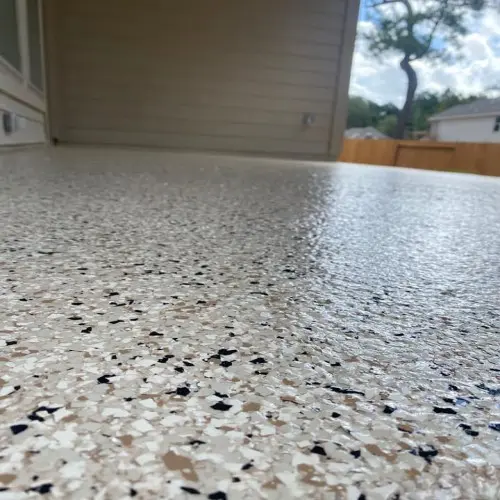
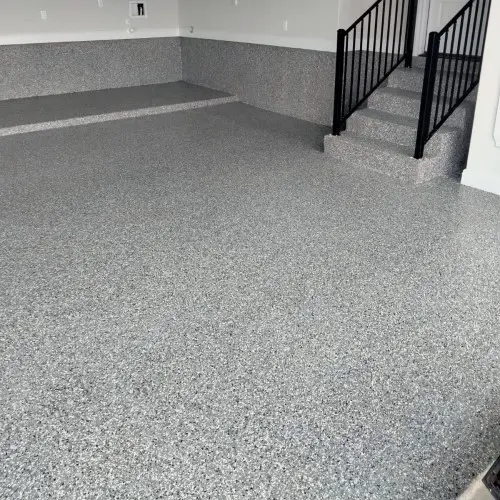
Non-slip epoxy flooring doesn’t mean compromising on design. Through the use of colored flakes and pigments, property owners can achieve a unique look while maintaining safety. Explore color and flake options to match the décor or branding of any space.
How Flakes Enhance Non-Slip Properties
Decorative flakes, when broadcast into wet epoxy, not only add visual interest but also contribute to the surface’s texture. This increases friction and reduces slipperiness, even when the floor is wet.
Epoxy Flooring vs. Other Non-Slip Flooring Solutions
| Flooring Type | Slip Resistance | Durability | Maintenance | Customization |
|---|---|---|---|---|
| Epoxy Flooring | High (with additives) | Excellent | Easy | Extensive |
| Vinyl Flooring | Moderate | Good | Easy | Limited |
| Ceramic Tile | Varies | Good | Moderate | Good |
| Rubber Flooring | High | Moderate | Easy | Limited |
| Concrete (Sealed) | Low to Moderate | Excellent | Easy | Minimal |
Installation Process for Non-Slip Epoxy Flooring
The installation of non-slip epoxy flooring involves several steps to ensure a durable and safe finish. Professional installers, such as those at Epoxy Garage Floors Montgomery, use specialized techniques and quality materials to achieve optimal results.
- Surface Preparation: The concrete substrate is cleaned, repaired, and sometimes mechanically abraded to ensure proper adhesion.
- Primer Application: A primer coat is applied to seal the substrate and improve bonding.
- Base Coat: The primary layer of epoxy is applied.
- Non-Slip Additive Broadcast: While the epoxy is still wet, non-slip aggregates (such as silica sand or vinyl flakes) are broadcast across the surface.
- Topcoat Application: A clear or colored epoxy topcoat is applied to lock in the aggregates and provide a smooth, easy-to-clean surface.
Maintenance Tips for Non-Slip Epoxy Floors
Epoxy flooring is known for its ease of maintenance. However, to preserve its non-slip properties and appearance, follow these simple guidelines:
- Sweep or dust mop regularly to remove debris.
- Clean spills promptly with a damp mop and mild detergent.
- Avoid abrasive cleaning tools that could wear down the textured surface.
- Periodically inspect for signs of wear or damage, especially in high-traffic areas.
- Reapply topcoats as recommended by the installer to maintain optimal slip resistance.
Frequently Asked Questions About Epoxy Flooring and Non-Slip Features
Is epoxy flooring slippery when wet?
Standard epoxy flooring can become slippery when wet. However, by adding non-slip aggregates during installation, the surface remains safe even in damp conditions.
Can non-slip epoxy be used outdoors?
Yes, non-slip epoxy systems are suitable for covered outdoor areas like patios, walkways, and pool decks. Proper formulation ensures UV resistance and durability.
How long do non-slip properties last?
With proper maintenance, non-slip epoxy floors retain their texture and grip for many years. High-traffic areas may require periodic reapplication of topcoats to maintain performance.
Does non-slip epoxy flooring require special cleaning?
No special cleaning agents are needed. Mild detergents and water are sufficient for regular maintenance, making it a practical choice for busy spaces.
Why Choose Epoxy Garage Floors Montgomery for Non-Slip Epoxy Flooring?
Epoxy Garage Floors Montgomery specializes in providing high-quality, customizable epoxy flooring systems with a focus on safety and aesthetics. Their expertise ensures that each installation meets the unique requirements of the space, whether it’s a residential garage or a commercial facility. By offering a wide range of color and flake options, customers can achieve a slip-resistant floor that matches their style preferences.
Explore More About Epoxy Flooring and Non-Slip Solutions
For a deeper dive into the benefits, applications, and customization possibilities of epoxy flooring, visit the epoxy flooring solutions page. Discover how non-slip epoxy floors can improve safety and enhance the look of your property.