
Extending a concrete patio adds valuable living space and brings new functionality to outdoor areas without sacrificing the cohesion of the existing home. Concrete Contractor Magnolia (CCM Concrete) has built a reputation for delivering long‑lasting structures by focusing on proper site preparation, accurate reinforcement placement and concrete mixes matched to each application. More details about the company’s full range of services are available on the Concrete Contractor Magnolia home page. This article explores patio extensions from the perspective of CCM, explaining why homeowners should consider expanding, how planning and construction unfold, and what to expect from the process.
Why Builders’ Patios Feel Small and How Extensions Change That
Most production homes come with a standard 10×10‑foot concrete slab, which is just enough space to open a back door but not enough room for an outdoor dining set or grill. CCM’s experience shows that homeowners quickly outgrow these slabs. Small surfaces clutter easily because chairs, tables and grills compete for limited room. By extending a patio, the original 10×10 space grows into a continuous, unified surface that supports heavier loads and better furniture placement.
An extension also prevents haphazard additions. When more space is needed, some owners set down pavers or use mismatched materials that settle unevenly. A professionally designed extension ties into the existing slab so the entire patio drains correctly and ages uniformly. CCM’s crews regularly inspect original slabs to plan a seamless transition. Control joints, base thickness, reinforcement type and concrete color all influence how well a new section blends with the old. When these details align, visitors see a larger, integrated patio rather than an obvious afterthought.
Typical Extension Sizes and the Benefits of Each
Homeowners in Magnolia often choose one of several common extension sizes based on how they use their outdoor space. The table below shows how an addition increases usable area and identifies the reinforcement CCM recommends for each case concrete-contractor-magnolia.com.
| Original Patio Size | Extended Patio Size | Added Space (sq ft) | Recommended Reinforcement |
|---|---|---|---|
| 10×10 ft (100 sq ft) | 20×10 ft (200 sq ft) | 100 sq ft | Wire mesh or #3 rebar |
| 12×12 ft (144 sq ft) | 22×12 ft (264 sq ft) | 120 sq ft | #3 rebar |
| 15×20 ft (300 sq ft) | 25×20 ft (500 sq ft) | 200 sq ft | #4 rebar |
| 20×20 ft (400 sq ft) | 30×20 ft (600 sq ft) | 200 sq ft | #4 rebar + compacted sub‑base |
These recommendations ensure that the slab remains structurally sound. Smaller patios with light usage can rely on wire mesh or thinner rebar (#3), while larger additions supporting outdoor kitchens or heavy furniture benefit from #4 bars and a thicker sub‑base to prevent settling.

The chart compares the area of typical patios with their extended counterparts. Each extended size more than doubles the original surface, giving homeowners flexibility for seating, cooking and entertaining.
Site Visit and Planning: Understanding Slopes, Drainage and Soil
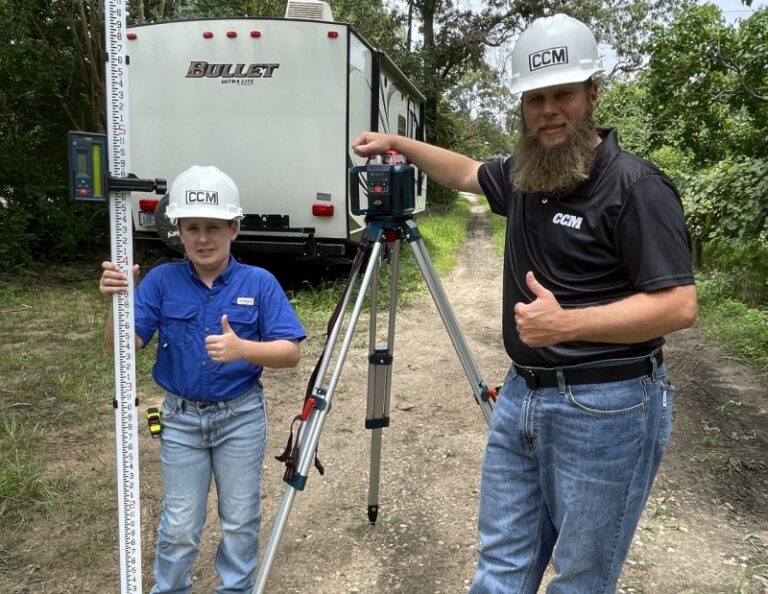
A successful patio extension begins with a site visit. CCM uses laser levels to establish existing elevations and determine how water currently flows across the yard. In Magnolia’s clay soils, improper drainage can cause slabs to lift or crack, so controlling slope is critical. The crew sets out control lines that create a uniform fall of about 1/8 inch per foot away from the house (roughly a 1–2% slope). This subtle grade moves rainwater off the patio without causing an abrupt step.
During planning, the crew also identifies underground utilities, access routes for concrete trucks, and the intended use of the space. For example, if the extension will support an outdoor kitchen, CCM increases slab thickness and reinforcement to handle additional weight. Homeowners are encouraged to ask questions at this stage; understanding drainage paths and reinforcement strategy leads to better decisions later.
Evaluating Soil and Preparing a Stable Base
Poor soil can undermine even the strongest concrete. Magnolia’s topsoil often contains organic matter that retains water. CCM removes this material and compacts the native clay or brings in select fill to achieve the desired load‑bearing capacity. A crushed‑limestone base of 4–6 inches is then installed, which promotes drainage and prevents the slab from settling. The base is compacted in lifts with vibratory plate tampers or rollers until it feels firm and passes a simple deflection test.
Next, forms are built using straight boards or curved pieces to match the design. Laser‑set elevations ensure that the finished surface aligns with the existing slab and meets the planned slope. Screed rails at the proper height help guide the finishers during the pour. Attention to detail in this phase makes the difference between a patio that drains evenly and one that holds puddles.
Reinforcement Strategies: Choosing the Right Steel
Concrete resists compression but cracks under tension. Reinforcing steel carries tensile forces to keep cracks tight and maintain structural integrity. CCM chooses reinforcement based on slab size, anticipated loads and whether the extension ties into an existing slab.
For small extensions, a grid of #3 rebar placed at 18‑inch spacing provides adequate strength. Larger surfaces or patios supporting heavy equipment may require #4 rebar on a similar grid. Wire mesh or welded wire fabric is sometimes used to control shrinkage cracks, though CCM prefers bar reinforcement because bars handle tension better. In all cases, steel is set on chairs so it lies near the slab’s mid‑depth—not buried in the dirt—ensuring that it can handle stress.
When tying into an existing slab, dowels are drilled and epoxied into the old concrete every 18–24 inches. These dowels transfer load between the old and new sections and prevent the extension from settling independently. The team uses #4 bars for dowels and ties the new rebar grid to them. If movement between the slabs is desired—such as when soils are unstable—an isolation joint may be used instead to allow differential movement without cracking.
Selecting Concrete Mixes and Controlling the Pour
One of CCM’s core principles is matching the concrete mix to the slab’s purpose. For patio extensions, they typically order a 3,500 PSI mix with air entrainment and a set retarder. Air entrainment introduces microscopic bubbles that give the concrete room to expand when water freezes and thus improves durability. A set retarder extends working time during hot Texas summers, allowing finishers to achieve a smooth surface.
Trucks arrive early to pour during the coolest part of the day and avoid rapid setting. Before concrete enters the forms, the crew wets the base and existing slab. Wetting prevents the dry ground from drawing water out of the mix and reduces the risk of cold joints when the new concrete meets the old. When tying into an existing slab, a bonding agent may be applied along the roughened edge to enhance adhesion.
During placement, concrete is vibrated or spaded around rebar to eliminate air pockets. Workers screed the surface to the correct elevation, then bull‑float to knock down ridges and bring up cement paste. Finishing depends on the chosen texture; a simple broom finish provides slip resistance, while a trowel, stamp or exposed aggregate finish can add decorative appeal. Stamped borders or salt finishes introduce subtle patterns; stain or integral color can match the original slab.
Control Joints and Expansion Joints
Concrete shrinks as it cures. To manage cracking, control joints are cut at one‑quarter of the slab thickness in intervals based on the patio’s dimensions. For example, a 20‑foot slab may have joints every 8–10 feet. When connecting to a house or another slab, expansion joints isolate the patio from structures that may move differently over time.
Curing, Protection and Early Use
Curing is not an afterthought; it’s a key step that determines strength. CCM applies a curing compound or covers the slab with blankets or plastic to retain moisture. Foot traffic should stay off for at least 24 hours, while outdoor furniture and grills should wait a week. Controlling cure prevents surface shrinkage and dusting, producing a durable finish that resists weathering.
Maintenance begins once the slab gains strength. After the first week, homeowners can remove cure blankets and start gently using the patio. Sealing the concrete after 28 days adds another layer of protection. CCM recommends a breathable penetrating sealer that repels water while allowing vapor to escape. In areas with heavy freeze–thaw cycles, resealing every few years keeps the surface looking fresh.
A Step‑by‑Step Walkthrough of Patio Construction
Extending a patio involves a series of coordinated tasks. CCM follows a process refined through years of field experience. The outline below provides a glimpse into how the crew delivers consistent results.
-
Verify Zoning and Permits – Before work begins, confirm that local guidelines allow the extension and that property lines are marked. Some subdivisions have setback requirements or drainage easements that affect slab placement.
-
Evaluate Soil and Drainage – Inspect soil composition and water flow. Decide whether to remove existing topsoil or improve drainage with French drains. Plan the slab elevation and slope to move water away from the home.
-
Stake Layout and Excavate – Mark the patio footprint, then excavate to the design depth plus the base thickness. Compact the subgrade and install a 4–6 inch layer of crushed limestone, tamping each lift.
-
Build Formwork – Set straight or curved forms to match the design. Verify elevations with lasers and secure forms with stakes. Check alignment with the existing slab to maintain a smooth joint.
-
Place Reinforcement and Dowels – Lay out a grid of #3 or #4 rebar on chairs. Drill and epoxy dowels into the existing slab if a structural tie is needed.
-
Order Appropriate Concrete Mix – Arrange delivery of 3,500 PSI concrete with the necessary admixtures. Schedule the pour early to avoid extreme heat.
-
Pre‑Soak and Apply Bonding Agent – Wet the base and existing slab; apply bonding agent where the old and new concrete meet.
-
Place Concrete and Finish – Pour the concrete continuously, working it into corners and around rebar. Screed, bull‑float and finish the surface according to the chosen texture. Align control joints with those in the existing slab to prevent random cracking.
-
Cure the Slab – Apply curing compound or cover the surface immediately. Keep moisture on the slab for at least three days. Limit foot traffic and wait a week before placing heavy furniture.
-
Remove Forms and Backfill – Strip forms after curing begins and backfill along the edges. This supports the slab and prevents erosion.
-
Seal and Maintain – Apply a penetrating sealer after the concrete has cured for at least 28 days. Inspect control joints and drainage annually to catch issues early.
The steps may vary slightly depending on the extension’s complexity, but following them ensures a patio that performs well and lasts. Homeowners who enjoy do‑it‑yourself projects can use this outline as a checklist to understand what professional installers do and why each phase matters.
Integrating New and Existing Concrete: Aesthetic and Functional Considerations
Extending a patio isn’t just about pouring more concrete; it’s about creating a unified space. CCM pays attention to color, texture and joint layout to ensure that the addition blends seamlessly. Several techniques help achieve this integration:
-
Color Matching and Staining – When the original slab has a specific color or stain, CCM tests pigments and integral color in the new mix. Acid staining after the pour can also achieve a consistent look across old and new surfaces.
-
Surface Texture – Matching the broom or stamped pattern on the original slab prevents the extension from standing out. Finishers adjust trowel timing and stamping tools to replicate the existing texture.
-
Control Joint Alignment – Extending control joints into the new section ensures cracks appear at predetermined lines rather than randomly. Misaligned joints make even a well‑finished extension look like a patch.
-
Decorative Borders – For homeowners who prefer a subtle transition, CCM can pour a stamped or exposed aggregate border around the extension. The border frames the old and new areas, making the expansion feel intentional rather than accidental.
These details might seem minor, but they influence how comfortable and attractive the expanded patio feels. Customers often remark that guests cannot tell where the original ends and the extension begins—this is the result of careful preparation and finish work.
Drainage Solutions for Magnolia’s Soil
Montgomery County’s heavy clay soils pose unique drainage challenges. Without proper grading, water can pond along the edges of patios and cause erosion or foundation issues. CCM addresses drainage in several ways:
-
Slope Control – A 2% slope (¼ inch per foot) built into the patio surface moves water away from the house to a designated outlet. This subtle slope is hardly noticeable when walking on the patio but effectively sheds rainwater.
-
French Drains – In areas where natural drainage paths do not exist, a French drain may be installed. These perforated pipes sit below the slab and collect water, conveying it to a lower area or storm drain.
-
Surface Channels or Swales – Sometimes simple grading of the yard or installation of shallow swales alongside the patio solves drainage problems. The key is planning drainage before the pour; retrofitting drains after the fact is costly and disruptive.
Homeowners interested in unique layouts—for example, patios that wrap around a pool—should discuss drainage early. A professional plan prevents water from pooling near the foundation or seeping into low spots.
Exploring Finish Options and Decorative Additions
A plain gray slab doesn’t have to be the end product. CCM offers a range of finishes that enhance both appearance and function:
-
Broom Finish – A light broom provides traction without creating deep grooves. It’s ideal for general patio use and easy to clean.
-
Salt Finish – Rock salt pressed into the surface creates a subtle, pitted texture. Once the salt is washed away, small voids remain, giving the patio a unique look.
-
Stamped Borders – Stamping along the edges or across the entire surface can mimic the look of stone or brick. Borders frame the patio and accentuate its shape.
-
Exposed Aggregate – Washing off the top layer of cement paste exposes small stones, creating a pebble‑like surface that resists slipping.
-
Staining or Integral Color – Coloring adds warmth or contrast. Integral color runs through the entire slab, while stains applied after the pour allow for variegated effects.
These options transform a utilitarian slab into a finished outdoor room that matches the homeowner’s style. Because finishing choices can affect cost and schedule, discussing them early helps align expectations.
Comparing Patio Extensions to Other Concrete Projects
Patio extensions share many techniques with other concrete installations, but each project has its own specifications. The table below compares CCM’s typical slab specs for different use cases.
| Use Case | Thickness (inches) | Reinforcement | Concrete Mix (PSI) | Joint Spacing (ft) | Estimated Lead Time (days) |
|---|---|---|---|---|---|
| Patio Extension | 4 | #3 rebar @ 18″ each way | 3,500 | 8–10 | 7–10 |
| Standard Driveway | 5 | #4 rebar @ 18″ each way | 4,000 | 10–12 | 10–14 |
| RV/Heavy Vehicle Pad | 6 | #4 rebar @ 12″ each way | 4,500 | 8–10 | 14–18 |
| Shop/Detached Garage Slab | 6–8 | #4 rebar @ 12″ each way + mesh | 4,500–5,000 | 10 | 14–21 |
| Walkway/Side Path | 4 | 6×6 wire mesh (6 gauge) | 3,000–3,500 | 6–8 | 5–7 |
Homeowners who plan to pour multiple concrete areas can see how specifications vary by use. For example, driveways often require thicker slabs and higher concrete strength to withstand vehicles. Patio extensions remain thinner but must still have strong reinforcement to handle everyday loads and occasional heavy items like smokers or planters.
Safety, Scheduling and Crew Coordination
Successfully executing a patio extension involves coordinating materials, equipment and personnel. CCM emphasizes safety and efficiency in every project. Concrete trucks require access paths; narrow gates or soft lawns can necessitate using a pump to place the mix. The crew carefully schedules deliveries to maintain a continuous pour and avoid delays that might cause cold joints.
Before work starts, homeowners should clear the area of obstacles and discuss any underground irrigation lines or landscaping features. Marking sprinkler heads and drain pipes prevents accidental damage during excavation. If a client plans to install an outdoor kitchen or pergola later, embedding anchor bolts or footings during the patio pour saves time and money down the line.
The CCM Difference: Quality That Lasts
As described on CCM’s About page, the company was founded to provide honest work at a fair price. Owner Brian Gillespie combined a lifetime of hands‑on experience with a desire to see jobs done right, not rushed. CCM invests in self‑leveling lasers, precision grading equipment and durable form boards to ensure accuracy. The team refuses to pour concrete on grass or unprepared soil because they know that a slab is only as good as the base beneath it.
Their approach is simple: excavate and grade properly, compact a gravel base, place rebar and wire mesh, use high‑strength concrete and apply appropriate finishes. These practices may take more time and material, but they yield surfaces that drain well, hold loads and age evenly. The Concrete Installers page summarizes this philosophy by highlighting load‑bearing subgrades, laser‑set forms, reinforcement at proper height, mixes matched to use and controlled curing.
Homeowners often find CCM’s pricing competitive because the company does not subcontract the entire job or inflate costs by 70–90%. Instead, Brian and his crew are on‑site, ensuring each step meets their standards. That dedication translates into patios and extensions that look cohesive and function for decades.
Ready to Transform Your Backyard?
Residents of Magnolia and surrounding communities like The Woodlands, Pinehurst and Conroe can enjoy more time outdoors by enlarging a cramped patio. When considering an extension, think about how you’ll use the space: will it host family dinners, support a smoker and prep counter, or create a quiet reading nook? Contacting CCM early allows you to discuss ideas, learn about financing options and schedule a free on‑site assessment.
As this guide shows, extending a patio involves more than pouring concrete. The planning, base preparation, reinforcement selection, drainage design, finishing and curing all influence the longevity and appearance of your new space. By choosing an experienced local contractor who values quality over shortcuts, homeowners can expand their living area with confidence. Explore the About page to understand CCM’s mission, read the step‑by‑step guide to building a concrete patio for deeper insight into the construction process, review the patio extension guide for Magnolia homeowners for more specific advice, learn about the company’s service area on the Concrete Contractor Magnolia TX page, and visit the contact page to start planning your patio extension today.