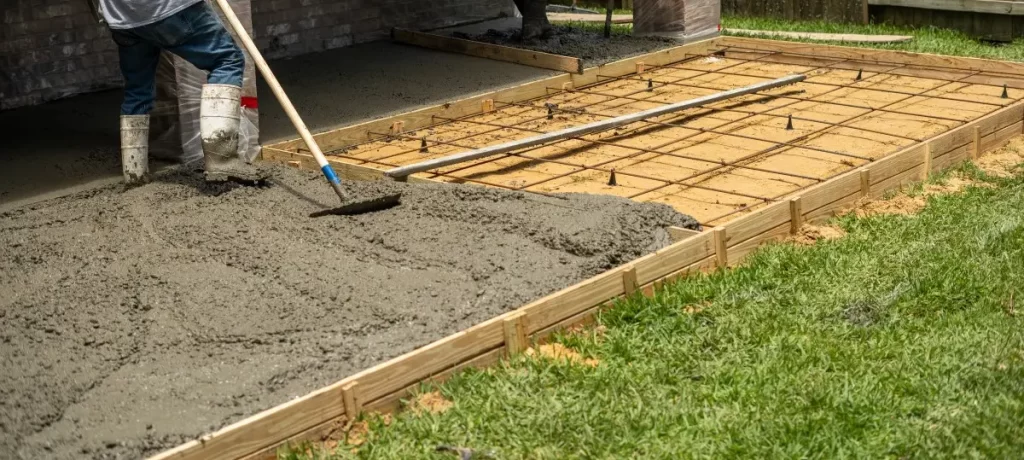

Homeowners in Magnolia often inherit small builder-grade patios that don’t meet real needs. A 10’x10′ slab might technically be a patio, but it doesn’t hold much beyond a grill and a couple of chairs. Most clients need more space for dining, relaxing, or adding structures like pergolas and outdoor kitchens. A concrete patio extension solves this directly.
Concrete Contractor Magnolia (CCM) installs functional patio extensions across the Magnolia, TX area, including Westwood, Thousand Oaks, Clear Creek Forest, and Indigo Lake Estates. Projects are planned to match existing slabs and built with proper slope, base prep, and reinforcement to hold up year after year.
Why Patio Extensions Are in Demand
Across Montgomery County, new homes frequently come with undersized patios. These small slabs don’t reflect how families actually use their yards. Patio extensions allow for:
-
Expanded seating and dining areas
-
Better grill station and cooking flow
-
Connection to other areas like walkways or garages
-
Support for heavy loads like pergolas, hot tubs, and built-in counters
There’s no need to switch to a deck. A reinforced concrete extension becomes part of the home’s layout — permanent, clean, and strong.
Step One: Walkthrough and Planning
Before any formwork starts, a site visit is scheduled. At that time, slope, drainage, soil condition, and control joint layout are reviewed. If the existing patio isn’t level with back doors or surrounding grass, that difference needs adjustment in the new pour.
Key prep items during planning include:
-
Verifying slope of the yard
-
Matching control joints from the existing slab
-
Identifying and adjusting downspout drainage
-
Choosing reinforcement type based on use case
-
Planning where furniture or structural loads will sit
Subtle grade shifts may not be visible without proper checks. A 1” mismatch can cause pooling or slab movement over time if not addressed.
Sub-Base Prep: What Goes Beneath the Slab
Most failures in patio extensions begin with skipped or rushed base prep. That doesn’t happen here. Magnolia soil is inconsistent — clay pockets, sandy sections, and root zones all exist in the same yard. For that reason, all slabs begin with proper excavation and base installation.
Sub-Base Details:
-
Material: Crushed limestone or road base
-
Depth: 4″–6″ depending on soil softness
-
Compaction: Mechanically compacted in lifts
-
Moisture Check: Surface lightly moistened to ensure bond
Before forms are set, the base is compacted level and inspected. Loose areas are reworked to ensure the slab sits on a firm platform that won’t settle.
Choosing Reinforcement
Concrete by itself handles compression well but is weak in tension. That’s why reinforcement is added for strength and longevity.
Options for Reinforcement:
| Reinforcement Type | Best Use |
|---|---|
| Wire Mesh | Light-use patios or budget jobs |
| #3 Rebar | Moderate use, seating + grills |
| #4 Rebar | High traffic, large furniture, pergolas |
| #4 Rebar + Sub-base Grid | Kitchens, spas, load-bearing features |
Rebar is tied in grid format, lifted with chairs before pour. Wire mesh is used less frequently due to lower crack control and finish consistency.
Matching the Existing Slab
Most patio extensions are connected to an existing slab that’s weathered. That slab may have discoloration, broom marks, or exposed edges. Matching is handled in both prep and finish.
Techniques for Blending:
-
Integral color matching: Pigment added to mix
-
Light acid stain: Used to blend brightness
-
Surface texture: Broom or light stamp to match
-
Control joint alignment: Cuts line up with old slab
No two slabs age the same. Blending is adjusted per project. In some cases, the original patio is lightly stained or cleaned to improve match with the new extension.
Common Extension Sizes and Use Cases
Based on completed projects, below are typical sizes and their best use cases in Magnolia:
Additional Notes:
-
Extensions are tailored to yard layout and furniture plans
-
Larger pours allow for future features without more demo
-
Reinforcement is always increased under planned structures
For more information, see this detailed article on how to build a concrete patio.
Pour Day: What to Expect
Pour day is scheduled early in the morning to avoid direct sun, especially during summer months. The full extension is poured, finished, and cleaned up the same day.
Pour Timeline (Typical):
-
7:00 AM – Final site prep, last checks
-
8:00 AM – Concrete truck arrives
-
8:30 AM – Screeding and edge shaping
-
10:00 AM – Broom finish or surface treatment
-
12:00 PM – Joint cutting and clean-up
-
1:00 PM – Cover for curing
Curing time for walking: 3 days. Heavy furniture: 7 days. Vehicle weight (for driveways): 28 days. Note, time frames are an estimate and depend on concrete trucks availability, project size, weather & etc.
Surface Options After Pour
Magnolia clients often upgrade surface finish before the concrete is ordered. This allows for the final look to be part of the initial pour without adding resurfacing costs later.
Available Finish Options:
-
Broom finish (standard and slip-resistant)
-
Salt finish (adds light texture speckle)
-
Stamped borders (adds detail without full stamp)
-
Exposed aggregate (adds grip and natural tone)
-
Color stain (blended to match trim or brick)
See examples of different finishes and edge patterns here.
Drainage and Slope Adjustments
Slope is critical in patio extensions. Standard practice is a 2% slope away from the home. This equals a 1/4″ drop per foot. For a 12’ extension, the outer edge is 3″ lower than the starting point.
In areas prone to pooling or with dense clay soil, optional drainage solutions are embedded:
-
French drains (gravel + perforated pipe)
-
Strip drains at the edge
-
Adjusted gutter spouts with discharge path
-
Shallow swales along the yard perimeter
All slope work is done during base prep. No rework or grinding needed post-pour.
Magnolia Neighborhoods with Frequent Patio Extensions
Certain neighborhoods in Magnolia have higher demand for extensions due to original patio sizes and lot layouts. Recent projects include:
-
Clear Creek Forest
-
Indigo Lake Estates
-
Thousand Oaks
-
Clovercreek
-
Magnolia Ridge
-
Westwood North
Each of these areas includes homes with builder-grade pads. Many clients expand in phases—starting with a basic extension, then adding shade or furniture-ready layouts later.
Built to Handle More Than Furniture
Patio extensions are often the first step before other backyard upgrades. The slab is designed with footings or anchor bolts included for what’s coming next.
Common Additions After Pour:
-
Covered pergolas (freestanding or attached)
-
Stone kitchen counters and built-in grills
-
Walkways to other areas of the property
-
Fire pit zones
-
Raised steps to accommodate slopes or beds
For each of these, slab reinforcement is prepped with purpose. Load-bearing points receive added support. Anchor hardware is set in fresh concrete.
View the full guide on adding a patio extension to an existing slab.
Quote Process and Pricing
Estimates are based on site conditions, size, reinforcement, and finish. To get a quote, clients provide:
-
Dimensions of existing slab
-
Desired extension size
-
Preferred finish or upgrades
-
Schedule availability
Quotes are all-inclusive: material, labor, haul-off, and cleanup.
Typical Pricing Range:
-
$10–$18 per sq ft
-
Includes basic reinforcement and standard broom finish
-
Final price varies based on thickness, drainage, and upgrades
See pricing breakdown and project calculator on the contact page.
FAQs
How much does a patio extension cost in Magnolia, TX?
Most patio extensions range from $10 to $18 per square foot. Price depends on size, soil condition, finish, and reinforcement.
Can the new slab match my existing patio?
Yes. Color blending, broom finish, and joint alignment are planned before pour to create a seamless match.
What’s the timeline for installation?
From quote to completion, most patio extensions are finished within 1–3 weeks depending on the weather and schedule.
Is reinforcement included?
Yes. Rebar or mesh is standard. Heavy-use slabs include added support for future features.
Can I add features like pergolas later?
Yes. Anchor points and footings can be included during the pour, avoiding future cutting or patching.
Is a permit required?
Not typically. For ground-level slabs without roofing or electrical, no permit is needed in Montgomery County.
What areas around Magnolia are served?
Service includes all of Magnolia and surrounding neighborhoods like Westwood, Thousand Oaks, Indigo Lake Estates, and Clear Creek Forest.