
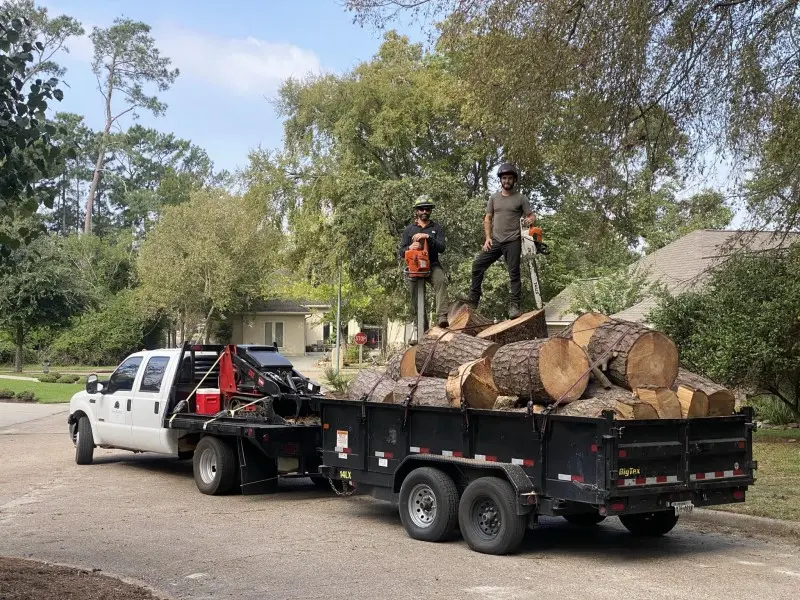
I’m Ryan Davis, owner of Davis Tree Service. For two decades I’ve climbed loblolly pines, dismantled storm‑split water oaks, and restored yards across Magnolia and the rest of Montgomery County. Clients often find me by typing tree removal near Magnolia after a branch crushes a fence or a trunk leans toward the roof. What follows is a detailed, 3,000‑word field note that lays out how I decide whether a tree stays or goes, the rigging steps my crew follows, and the real‑world costs you can expect. The bar chart above shows how trunk diameter drives price; bookmark it for your budgeting.
1 Why Homeowners Choose Full Removal Instead of Another Prune
Shade matters in Texas, yet safety matters more. Clay soils expand in February rain, then shrink in August heat. That shift shears roots and tilts trunks. When I spot fresh root plate lift or hear carpenter ants hollowing an interior column, pruning no longer protects property. In those conditions, removing the entire tree reduces liability and clears space for stronger species.
A quick yard walk answers three questions:
-
Does the fall radius reach the house, wires, or a neighbor’s driveway?
-
Has the root collar cracked or lifted more than an inch?
-
Are there vertical seams, conks, or hollows?
Two “yes” answers send the tree to the removal list.
2 Species That Fail Most Often Near Magnolia
| Species | Common Failure Mode | Typical Failure Month |
|---|---|---|
| Loblolly pine | Bark‑beetle galleries weaken sapwood | August |
| Water oak | Co‑dominant crotches split in high winds | April |
| Sweetgum | Shallow roots heave after heavy rain | May |
| Hackberry | Rapid rot in trunk cavities | Year‑round |
| Chinaberry | Brittle scaffold branches | June |
These trees thrive in our acidic soils yet develop weak structures. I log each one that borders homes and schedule periodic evaluations.
3 Initial Hazard Assessment
-
Ground Scan – Search for mushrooms, soil mounding, or sinkholes.
-
Trunk Sounding – Tap with a mallet; a hollow thunk signals cavity.
-
Canopy Mapping – Use binoculars to locate dead tops or split leads.
-
Load Path – Trace escape lines, gear anchor positions, and drop zones.
-
Neighbor Notice – Hand‑deliver flyers if the fell radius crosses property lines.
That five‑point check keeps surprises to a minimum once saws start.
4 Gear That Turns Risk Into Routine Work
-
60‑ft rear‑articulating bucket truck for street access jobs.
-
Compact tracked lift (CTE Traccess 200) when gates block trucks.
-
Rope winch rated 2,200 lb for controlled negative rigging.
-
ISC triple‑thrown blocks, slings, and bollards to manage swing.
-
Bio‑based chain oil to protect wells and ponds from runoff.
-
Bluetooth helmet comms so climber and groundies stay synced.
Reliability beats horsepower; every device gets logged and inspected weekly.
5 My Step‑by‑Step Dismantling Process
(Case: 50‑ft water oak leaning over a storage shed)
-
Protect Turf – Ground crew rolls in plywood mats to prevent ruts.
-
Set Primary Anchor – Climber installs a friction‑saver at 45 ft.
-
Limb Walk & Pie‑Cut – Branches under 150 lb lower via static line.
-
Butt‑Hitch heaviest leads – Redirect through a Porter wrap for smooth descent.
-
Block Down Trunk – 16‑inch billets eased into drop zone.
-
Chainsaw Flush‑Cut – Stump sits at grade; borate applied against termites.
The shed roof stays intact, and firewood piles neatly by dinner.
6 Cost Drivers Explained Through the Chart
The bar graph above compares average removal prices by trunk diameter:
-
< 12 inches: ≈ $350 – often paired with other smalls.
-
12–24 inches: ≈ $650 – climb and simple rigging.
-
24–36 inches: ≈ $950 – bucket truck or lift required.
-
> 36 inches: ≈ $1,500 – crane assist plus traffic control.
Prices cover labor, haul‑off, and stump flush. Grinding adds $3–$4 per stump inch.
7 Hidden Costs and How I Reduce Them
-
Utility Coordination – I call Texas 811 before grinding near buried lines.
-
HOA Liaison – Letter of diagnosis often satisfies architectural rules, avoiding fines.
-
Traffic Plans – For cranes on Stagecoach Road, I arrange flaggers, saving homeowners citation risk.
-
Mill Credit – Large hardwood logs slabbed at a local sawmill offset disposal fees.
Clear communication keeps the invoice aligned with the estimate.
8 Stump Grinding or Leaving Flush—Which Fits?
| Goal | Flush Cut | Grind 6 in | Grind 12 in |
|---|---|---|---|
| Prevent trip hazard | ⚫️ | ✅ | ✅ |
| Re‑sod lawn | ⚫️ | ✅ | ✅ |
| Plant new tree | ⚫️ | ⚫️ | ✅ |
| Erosion control on pond bank | ✅ | ⚫️ | ⚫️ |
Grinding integrates chips with topsoil; I rake smooth and seed with Bermuda. Flush cuts hold soil on slopes.
9 Debris Disposal and Value Recovery
I chip brush into the truck and dump chips free for gardens. Logs wider than 14 inches head to a sawmill west of FM 1774; clients can request keepsake slabs for outdoor benches. Smaller hardwood rounds split for smoker wood and deliver to barbecue enthusiasts in Indigo Lake Estates.
10 When Emergency Removal Trumps Scheduling
After April squall lines, leaning trees threaten roofs. Insurance adjusters accept my aerial drone footage and hazard letters. I handle the assignment of benefits paperwork when policyholders need immediate relief. Tarps go on before the next rain, and debris clears curbside to keep driveways open.
11 Permits and Local Codes in Magnolia
-
City of Magnolia ROW: Trees within 10 ft of curb need an arbor permit; I file online.
-
Montgomery County Floodplain: Removal near creek banks requires erosion‑control plan; mulch berms satisfy the inspector.
-
Entergy Overhead Lines: I schedule sag clearances 48 hours ahead.
-
Pipeline ROW: Texas 811 tickets confirm safe grinding depth.
Paperwork first, chainsaws second.
12 Seasonal Timing and Price Fluctuations
| Season | Crew Efficiency | Demand | Price Index |
|---|---|---|---|
| Winter | Cooler temps | Low | –5 % |
| Spring | Storm prep | High | +5 % |
| Summer | Heat slows pace | Moderate | Baseline |
| Fall | Drought stress removals | Rising | Baseline |
Booking December through February often shaves labor costs and secures earlier slots.
13 Frequently Asked Questions About Tree Removal Near Magnolia
Does insurance cover proactive removal?
Most carriers pay only after damage, yet hazard letters sometimes unlock partial reimbursement. Ask your adjuster.
How soon can I replant?
Wait three months after grinding for chips to settle, then add fresh topsoil before installing saplings.
Can you save part of the tree as a chainsaw‑carved sculpture?
Yes. I coordinate with local carvers who shape 3‑ft stumps into wildlife art.
Will equipment crush my septic lines?
Tracked loaders spread weight, and plywood roads shield lateral pipes. I flag tank lids first.
How loud will the job be?
Chainsaws peak at 110 dB; we start at 8 a.m. and break during lunch upon request.
Do you leave firewood?
Yes, quartered and stacked. Haul‑off available if a clean lawn is preferred.
How long does a 24‑inch oak take?
Typically four hours from first cut to sweep‑up, weather permitting.
Should I remove a healthy pine for solar panel plans?
Shade analysis shows cost savings; I provide removal plus stump grind to clear racks.
Are permits needed in unincorporated ETJ areas?
No city permit, yet creek setbacks and floodplain rules still apply.
What payment methods do you accept?
Check, credit, or ACH. Larger crane jobs require 30 percent deposit.
14 Service Areas We Cover
-
Magnolia city core
-
High Meadow Ranch
-
Westwood Village
-
Durango Creek
-
Decker Prairie
-
Pinehurst fringe and Tomball by appointment
Outside that ring, mileage fees apply but the same crew handles the work.
15 Project Gallery and Proof
See time‑lapse clips, hazard snapshots, and crane picks in the gallery. Each photo shows before, mid‑rigging, and final grade raked clean.
16 Safety Culture and Certifications
My climbers hold ANSI Z133 training certificates. Gear logs track rope cycles, harness inspections, and saw maintenance. Every job starts with a tailboard meeting covering:
-
Escape routes
-
Electrical proximity
-
Weather triggers for shut‑down
-
Traffic cone layout
These routines translate into zero lost‑time incidents for the past five years.
17 Step‑by‑Step Homeowner Prep Checklist
-
Move vehicles from driveway.
-
Mark sprinkler heads with flags.
-
Unlock side gates.
-
Contain pets indoors.
-
Confirm power outlets if stump grinder needs 110 V.
-
Review estimate, sign e‑doc, and schedule access code.
Following those steps speeds arrival and cuts idle time you would still pay for.
18 Replanting Recommendations
After removals I often plant:
| Species | Height | Root Depth | Benefit |
|---|---|---|---|
| Shumard oak | 60 ft | Deep taproot | Shade, resilient to storms |
| Cedar elm | 50 ft | Medium | Tolerates drought |
| Mexican white oak | 40 ft | Medium | Evergreen foliage |
| Lacey oak | 35 ft | Shallow | Small yards, low maintenance |
All grow well in USDA zone 8b and resist borers that plague pines.
19 Emergency Numbers and Storm Prep Tips
-
Entergy outage line: 1‑800‑968‑8243
-
Magnolia Fire Department non‑emergency: 281‑356‑3288
-
Keep tarps, 16d nails, and a 20‑ft ladder on hand.
-
Photograph trees annually for insurance benchmarks.
Those small moves shave days off adjuster approval when chaos strikes.
20 Call for Your Custom Estimate
Use the form on the contact page or dial direct. Provide trunk diameter at chest height, distance to nearest structure, and a photo of the base. I return a line‑item quote and timeline within one business day.
Removing a problem tree isn’t just clearing space; it protects roofs, fence lines, and peace of mind before the next Gulf storm sweeps through. Let’s schedule the lift before wind makes the decision for you.