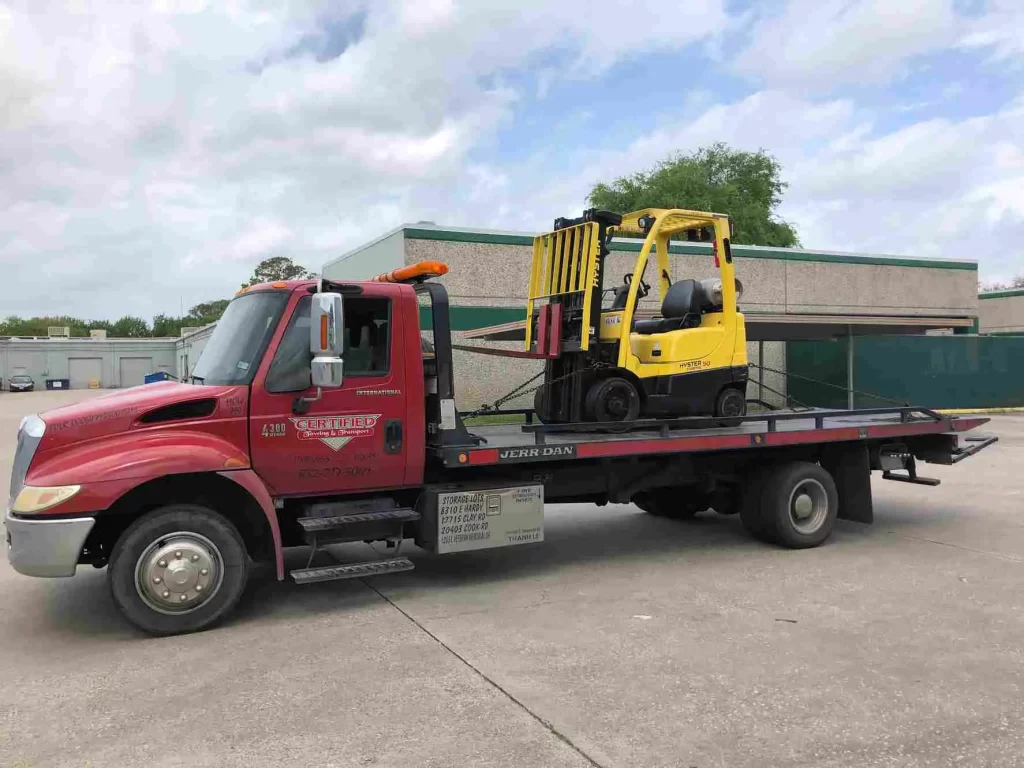

When your heavy equipment or industrial machinery breaks down, gets stuck, or needs relocation, you need more than just a regular tow truck. You need a partner with the experience, fleet, and skillset to manage the unique challenges of heavy equipment transport—safely, reliably, and on time. At Certified Towing & Transport, we specialize in heavy machinery / heavy equipment towing services and pride ourselves on being the go-to solution for businesses and contractors across the Houston area (and beyond).
In this article, we explain:
-
What “heavy machinery towing” means
-
Why your project or business may need such services
-
The challenges and risks involved
-
How Certified Towing & Transport addresses those challenges
-
Important safety, compliance, and logistical considerations
-
Tips for choosing a heavy equipment towing provider
-
Our service offerings and how to get in touch
What Is Heavy Machinery / Heavy Equipment Towing?
“Heavy machinery towing” (also called heavy equipment transport or heavy haul towing) refers to the service of moving large, often oversized and overweight, equipment from one location to another via specialized towing or transport vehicles. Unlike standard vehicle towing (cars, SUVs, light trucks), heavy machinery towing involves:
-
Oversized loads — equipment such as bulldozers, excavators, cranes, graders, and large farm machines often exceed ordinary width, height, or length limits
-
High weights — such machinery may weigh many tons, requiring heavy-duty rotator trucks, lowboy trailers, or multi-axle heavy haulers
-
Delicate handling — heavy equipment often has sensitive components, hydraulics, tracks, or booms that must be secured and supported correctly
-
Route planning and permits — transport routes must often be pre-approved, possibly requiring escorts or special permits
-
Loading and unloading complexity — loading/unloading from job sites, inclines, or uneven terrain adds extra challenges
In short: heavy equipment towing is a highly specialized subset of towing and transport, demanding advanced resources, training, and planning.
Why You May Need Heavy Machinery Towing Services
Even with the best maintenance, heavy equipment sometimes needs professional towing or transport. Here are common scenarios in which businesses, contractors, or owners call on a service like ours:
-
Breakdowns on job sites or remote locations
A track loader fails deep in a work zone. Rather than attempt risky in-place repairs, you call in a heavy machinery tow to transport it safely to repair facilities. -
Relocation to a new project site
You’ve won a contract in a different region and need to move your fleet—bulldozers, excavators, skid steers—from one site to the next. Heavy haul trucks make that possible. -
Equipment stuck or tipped
In muddy or rugged terrain, machines sometimes get stuck, bogged, or even tip. A specialized tow truck (e.g. a rotator or heavy-winch unit) can recover and upright them. -
Auction, resale, or delivery
If you’ve purchased a piece of heavy machinery or are reselling equipment, you’ll need shipping to and from auction houses or buyers. -
Emergency or disaster response
Storms, floods, or construction mishaps can damage or immobilize heavy equipment, requiring a responsive, capable tow service. -
Preventive repositioning
At some large worksites (e.g. mines, large infrastructure projects), you may reposition machines during off hours or maintenance windows to minimize downtime.
In all these cases, choosing a dependable heavy equipment towing company can save time, reduce risk, and avoid costly mistakes.
Key Challenges & Risks in Heavy Equipment Towing
Because heavy machinery towing is far more demanding than consumer vehicle towing, there are significant pitfalls if you choose the wrong provider. Here are the major challenges:
1. Weight & Load Capacity
Machines like excavators, cranes, dozers, or graders can weigh tens of thousands of pounds. If the tow truck, trailer, or rig is undersized for the load, you risk structural failure, legal fines, or catastrophic accidents.
2. Proper Securing & Support
Heavy equipment often has fragile components: booms, hydraulic lines, tracks, counterweights. Improper securing can cause equipment damage in transit. The tow operator must use proper rigging, chains, tensioners, and support points.
3. Route Restrictions & Permits
Many roads, bridges, tunnels, or underpasses can’t handle extreme loads or oversize heights/widths. Route planning may require:
-
Permits for oversize or overweight loads
-
escort vehicles or police escorts
-
Time-of-day restrictions (e.g. hauling at night or weekends)
-
Road closures or construction detours
Without due planning, transports can be delayed, fined, or forced to reroute last-minute.
4. Load Geometry & Clearance
Height, width, and turning radius matter. Overhanging booms or arms might need to be stowed. The tow logistician must check for overhead wires, bridges, light poles, tight corners, or narrow roads.
5. Ground Conditions & Site Access
Machines are often located in rough terrain, muddy fields, or cramped work sites. Getting the tow truck or trailer into position can be physically challenging, requiring off-road capability, winches, stabilization outriggers, or creative loading techniques.
6. Coordination & Communication
Heavy equipment moves often involve multiple parties: equipment owners, job site supervisors, local authorities, and tow operations. Coordination of timing, safety, staging, insurance, etc., is critical.
7. Safety & Liability
High loads carry high risk. One error in load securement, braking, or maneuvering can result in severe injury, damage to infrastructure, or equipment loss. Ensuring compliance with regulations, safety standards, and insurance coverage is essential.
How Certified Towing & Transport Handles Heavy Equipment Towing
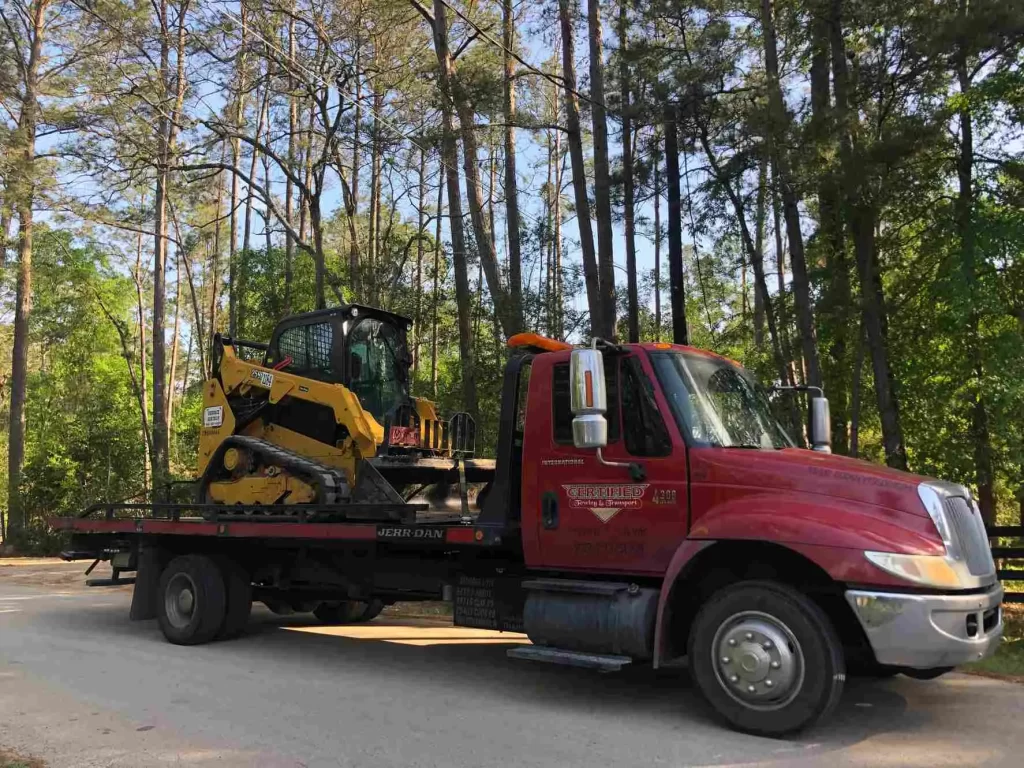
At Certified Towing & Transport, we don’t treat heavy equipment like oversized cars. Our approach is comprehensive, from planning through execution. Here’s how we ensure a safe, efficient, and stress-free experience for our clients:
Expert Assessment & Planning
-
Initial site survey (in person if needed) to assess loading geometry, ground conditions, access points, and route challenges
-
Detailed load data collection (weight, dimensions, center of gravity, lifting points)
-
Route planning & permit acquisition, including coordination with local transportation authorities
-
Escort vehicles and telematics support, when required
Heavy-Duty Fleet & Equipment
Our fleet includes a variety of vehicles and tools suited to different scales:
-
Multi-axle heavy haulers and lowboy trailers
-
High capacity rotator tow trucks
-
Air-ride or hydraulic suspension trailers to absorb load variations
-
Winch systems, boom lifts, and outriggers to assist in difficult loading/unloading
-
Specialized load securement gear (chains, binders, spreader beams, cradles)
-
Remote control equipment or cameras, where visibility is challenging
Loading, Securing & Transport Execution
-
Use of rigging experts to place slings, spreader bars, frame supports, and chain angles
-
Strict adherence to load securement standards (DOT, OSHA, OEM specs)
-
Balanced weight distribution across axles to maintain legal compliance
-
Real-time monitoring of load stability during transit
-
Communication with escort vehicles or spotters when navigating tight paths
Safety, Compliance & Insurance
-
Fully insured for heavy equipment damage, third-party liability, and cargo protection
-
Certified driver-operators with experience in industrial hauling
-
Compliance with all state, local, and federal regulations (including oversize/overweight permits)
-
Safety inspection before departure, en route checks, and post-delivery inspection
-
Incident response planning and backup contingencies
Client Communication & Transparency
-
Clear written estimates and scope of work
-
Real-time updates via phone, GPS, or mobile interface
-
Pre-move briefings with job site teams
-
Assistance with job site staging, timing windows, and coordination
By combining deep technical know-how, premium equipment, and transparent processes, we make even the most complex heavy machinery tow feel seamless for our clients.
Benefits of Partnering with Certified Towing & Transport for Heavy Equipment Moves
Choosing Certified Towing & Transport for your heavy machinery towing needs delivers many tangible advantages:
-
Reduced Downtime
Our efficient planning and execution shorten delays, keeping your production schedules on track. -
Minimized Risk of Equipment Damage
Your machines are high-value assets. Our approach protects them from stress, bending, shocks, or improper securing. -
Regulatory Peace of Mind
We handle all permitting, escorts, compliance with load limits and route restrictions — you avoid surprises and fines. -
One-Stop Solution
From site assessment to final drop off, we handle everything — no juggling multiple vendors. -
Scalability & Flexibility
Whether you’re moving one excavator or an entire fleet, our modular resources can scale with you. -
Safety Assurance
Every job is mapped with redundancy, safety protocols, and vetted personnel.
What to Look for in a Heavy Machinery Towing Provider
When evaluating potential heavy equipment towing companies, here are key criteria to check:
-
Experience & track record
Look for a provider with documented heavy haul projects, client references, and case studies. -
Appropriate fleet diversity
Ensure they have trucks, trailers, and tools for the specific scale of your equipment. -
Permitting & escort capabilities
They should manage oversize and overweight permits plus arrange required escorts when needed. -
Certifications & insurance
Request proof of insurance, proper licensing, and load securement training. -
Transparent pricing & estimates
Beware of vague quotes. A reliable provider delivers detailed breakdowns: labor, permits, escort, staging, etc. -
Safety culture & compliance
Their processes should reflect a strong safety-first mindset, with inspections, contingency plans, and documented protocols. -
Responsiveness & communication
You want reliable updates, fast responses, and willing collaboration with your site teams.
Certified Towing & Transport checks every box above — we encourage prospective clients to review our case history and speak with our operations team to confirm.
Typical Steps in a Heavy Equipment Towing Project
To give you a sense of how we operate, here’s a typical workflow:
-
Project Intake & Information Gathering
— Client submits equipment specs, pickup/delivery locations, timeline requirements
— We schedule a preliminary site visit (if required) -
Site Survey & Logistics Assessment
— Inspect job site access, staging zones, gradients, ground strength
— Identify potential route hazards or restrictions
— Measure dimensions, lifting/rigging points -
Permit Planning & Escort Coordination
— File for oversize/overweight permits with authorities
— Arrange escort vehicles, scheduling, and route approval -
Equipment Allocation & Scheduling
— Choose appropriate tow truck, trailer, rigging gear, crew
— Assign certified operators and support staff
— Book required equipment and reserve transport window -
Staging & Pre-Move Preparations
— Clear ground, level staging areas
— Place mats, cribbing, ground support if needed
— Pre-check rigging gear and anchors -
Loading & Securing
— Use boomed lift or winch systems to load the equipment
— Position load onto trailer, adjust axles as needed
— Secure with approved chains, binders, spreaders, cradle supports
— Perform a stability test or shake-down run -
Transit & Monitoring
— Escort vehicle leads or follows as required
— Monitor load via telematics, spot oversight
— Stop for inspections as mandated by permit -
Unloading & Setup at Destination
— Reverse the loading process with same care
— Check alignment, leveling, and safety at final resting spot
— Inspect the machinery and transfer to client’s site team -
Post-Move Evaluation & Reporting
— Provide documented delivery verification, photos, and condition reports
— Invoice with transparency
— Debrief to capture lessons learned for future moves
We tailor each step to your project’s complexity, site conditions, safety margins, and schedule demands.
Heavy Equipment Towing in Houston & Surrounding Regions
Given Houston’s extensive industrial, construction, energy, and infrastructure sectors, there’s high demand for heavy machinery towing services in this region. Whether you’re operating in Harris County, Galveston, the Ship Channel, or out toward rural counties, you’ll want a towing partner familiar with local rules, permitting, and terrain.
At Certified Towing & Transport, we maintain deep familiarity with Houston-area routes, municipal permit offices, county regulations, and traffic patterns. That local expertise translates to faster approvals, fewer delays, and safer transit for heavy loads within the region.
We also serve clients beyond Houston — across Texas or even interstate — leveraging our scalable fleet and established logistics networks.
Frequently Asked Questions (FAQ)
| Question | Answer |
|---|---|
| What defines a “heavy equipment” load? | Loads exceeding typical vehicle weight/size limits (often multiple tons, wide, tall, or long) — e.g., excavators, cranes, trenchers, large agricultural machines. |
| How far in advance should I schedule a move? | At least 7–14 days for simple relocations; 30+ days for interstate, complex, or oversize loads with long permit lead times. |
| Do you handle interstate transport? | Yes, we have experience with multi-state heavy transport, interstate permit coordination, and DOT compliance. |
| Who is responsible for permits? | We handle permit application, payment, approval tracking, and routing — it’s part of our full-service offering. |
| What if my site is muddy or hard to access? | We bring off-road capable equipment, stabilizing mats, outrigger supports, and site prep services to ensure safe access. |
| What happens if load damage occurs? | We carry full insurance and maintain rigorous load securement protocols to minimize risk. In the rare case of damage, we handle claims in-line with contract terms. |
| Can you help me plan to minimize costs? | Yes — we can advise on move scheduling (non-peak hours), route optimization, phased shipping, and combining loads to reduce per-unit cost. |
Why Trust Certified Towing & Transport
We believe that great service is built on capabilities, transparency, and trust. Here’s what sets us apart:
-
Decades of experience in commercial and industrial towing
-
Specialized fleet tailored for heavy loads and rigorous conditions
-
Full-service approach, from permits to delivery
-
Strong safety record, certified operators, and insurance coverage
-
Responsive customer service, real-time tracking, and clear communication
-
Local knowledge + regional reach — ideal for Houston-area projects or intercity moves
We’re committed to delivering heavy equipment safely, on time, and with minimal hassle. We consider your machinery as critical assets deserving the highest care.
How to Request Heavy Machinery Towing from Us
-
Visit our main site at Certified Towing & Transport for an overview of our services
→ Certified Towing & Transport -
Go to our general towing service page to understand our approach and full offerings
→ Towing Service -
Contact us via phone or email with your equipment specs (weight, dimensions, load points), pickup and destination addresses, site conditions, and preferred schedule
-
We’ll schedule a site survey or virtual assessment and provide a detailed written estimate
-
Upon approval, we manage permits, rigging, routing, execution, and delivery — keeping you fully informed at every step
Conclusion
Heavy machinery towing is not a task for generalist tow companies. It demands precision, technical skill, regulatory awareness, and a robust fleet. At Certified Towing & Transport, we bring all of that experience and infrastructure to the table.
Whether your excavator is disabled, your crane needs relocation, or your industrial equipment must cross jurisdictions, we’re ready to manage the full scope — from planning through delivery.
When you partner with us, you’re choosing a provider that sees your heavy equipment as critical assets, not burdens. Trust us to get your machines moving — safely, efficiently, and reliably.
If you’d like to discuss a heavy equipment move or request a quote, contact us today. We look forward to becoming your long-term partner for all heavy machinery towing and transport needs.