Welcome to Davis Tree Service — your trusted tree-care specialists in Montgomery County and the surrounding Texas communities. At Davis Tree Service, we’re dedicated to preserving the health, safety, and beauty of your trees. One of the key services we provide is cabling and bracing, a proactive approach to supporting trees with structural weaknesses instead of jumping straight to removal. If you’d like to explore all our offerings, visit our services page.
In this article, we’ll walk you through what cabling and bracing are, why a tree on your property might need them, the benefits of these techniques, and how Davis Tree Service can help you make the right decision and execute the work professionally.
What Is Cabling & Bracing?
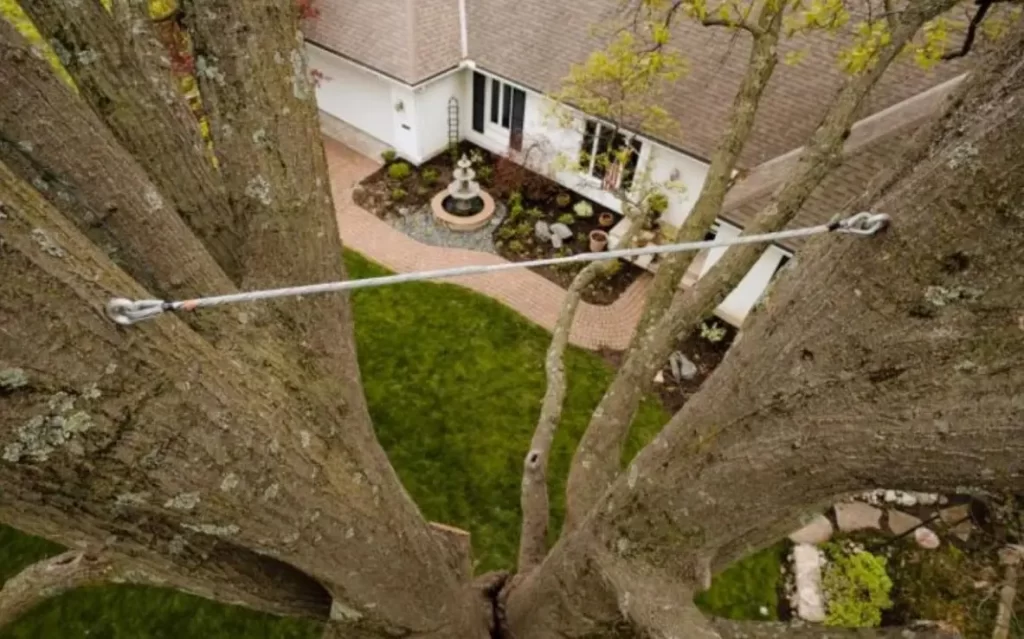
Cabling and bracing are mechanical support systems installed in a tree to help manage structural weaknesses and reduce the risk of branch or trunk failure. When properly applied by trained arborists, they allow a tree to remain safely in place while reinforcing its vulnerable areas.
-
Cabling: Installation of flexible or high-strength cables between major limbs or stems. The goal is to redistribute stress and limit movement of weak attachments or branches.
-
Bracing: Use of rigid rods, bolts or braces inserted into or through weak stems, trunks, or branch unions to add strength and prevent splitting.
These techniques are widely used in arboriculture to preserve trees that are otherwise still healthy but present risk factors for failure. Tree support cables and braces are proactive and preventive additions meant to support and extend a tree’s structural life.
At Davis Tree Service, we assess your trees’ health, structure, and site conditions, then recommend whether cabling or bracing is appropriate — or if other measures like pruning or removal are more prudent.
When Might Your Tree Need Cabling & Bracing?
Understanding when cabling and bracing are needed helps you to protect your landscape, your property, and the people around it. Some common scenarios include:
Signs of Structural Weakness
Here are key indicators that a tree may be a candidate for cabling and/or bracing:
-
A tree has codominant stems or a narrow “V”-shaped union rather than a single strong trunk. Trees with this growth are more prone to splitting.
-
A tree displays large, overextended limbs that stretch far out from the trunk without adequate support, increasing stress on the attachment point.
-
The tree has experienced storm damage, including large limb cracks or fractures, lightning strikes, or high wind stress.
-
A trunk or major stem shows a visible crack, split, or decay, indicating a weak point that may lead to failure under load or in high wind.
-
The tree is situated in a location where failure could cause damage to property, utilities, or injury — for example, near buildings, driveways, or play areas.
The presence of one or more of these conditions does not always mean removal is necessary — but it does mean the tree warrants close professional review. At Davis Tree Service, we will inspect your tree’s condition, assess the risk, and let you know if cabling or bracing offers a viable solution or if removal may be safer.
Why Choose Cabling & Bracing? The Benefits
Choosing to cable or brace a tree can yield multiple advantages, particularly when compared to the cost and consequence of tree failure or removal. Below are the key benefits.
1. Enhanced Safety
By stabilizing weak attachments and limiting branch movement, cabling and bracing reduce the risk of large limb or trunk failure — which in turn lowers the chances of property damage or personal injury. In Texas, where storm-wind, heavy rain, or occasional ice can challenge tree structure, having preemptive support makes sense.
2. Prolonged Tree Life
Much of the value of a mature tree comes from its size, maturity, and contribution to landscape character. Cabling and bracing allow you to preserve a tree that might otherwise be lost or removed prematurely. Use cables and braces to prevent the failure of an otherwise healthy tree that has a major structural weakness. When done correctly, this can give you years — even decades — of additional life from the tree.
3. Cost-Effectiveness
While the installation of support systems has an upfront cost, it is often much less expensive than the cost of emergency tree removal, property damage repair, or repeated cleanup after failures. Preventive support may save you from paying much more later.
4. Preservation of Mature Landscape Value
Mature trees provide shade, curb appeal, habitat for wildlife, and general ambiance. Maintaining a tree’s presence rather than removing it helps preserve the value these mature specimens contribute to your property.
5. Minimally Invasive Alternative to Removal
If a tree is structurally compromised but otherwise healthy — with a good root system and free of major disease — cabling and bracing offer a less drastic alternative to removal. It allows the tree to remain and thrive rather than being taken down entirely.
How We Perform Cabling & Bracing at Davis Tree Service
At Davis Tree Service, we approach cabling and bracing with precision, professionalism, and care. Here’s our typical process:
1. Initial Tree Evaluation
Our Certified Arborist (or team) will examine your tree’s species, age, trunk and branch structure, union attachments, signs of damage or decay, and the surrounding environment (proximity to buildings, utilities, property lines).
We will determine whether the tree is a good candidate for support systems or whether removal or major pruning is the better option.
2. Recommendation & Proposal
If cabling or bracing is appropriate, we provide a detailed proposal outlining what type of support is needed, where hardware will be installed, the timeline, costs, and expected benefits. We also discuss maintenance — cabling systems should be inspected periodically.
3. Preparation & Pruning
Before hardware installation, we typically prune any damaged or dead limbs, reduce overextended limbs if needed, and ensure the tree crown is balanced. This helps reduce loads and ensures the support system works effectively.
4. Installation of Support Systems
-
Cables are installed between major limbs or between a major limb and trunk using anchors or bolts in sound wood. The cables are designed to limit excessive movement while allowing natural sway.
-
Bracing rods are used in situations like multiple leaders or a weak union, where a rod is inserted through the union or branch attachment to prevent spreading or splitting. Often, cabling and bracing are used together for maximum support.
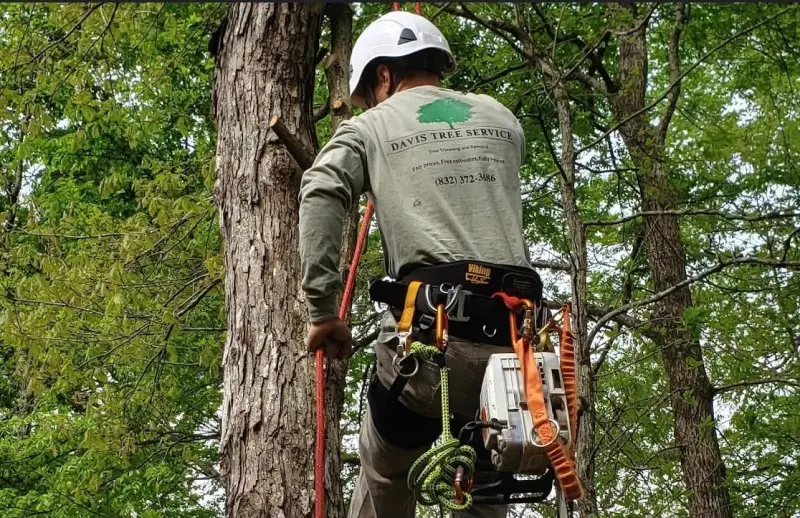
All installation is done with proper arborist equipment and safety protocols, to protect both the tree and our crew.
5. Monitoring & Maintenance
After installation, the system is not “install and forget.” It is important to inspect the hardware and the tree growth periodically — checking for corrosion, anchor wood integrity, cable tension, and growth changes. Many professionals recommend annual inspections from the ground and more thorough inspections every few years.
At Davis Tree Service, we can include this inspection service as part of your ongoing tree care.
6. Communication & Follow-Up
We’ll explain to you what was done, how to monitor the tree, any warning signs to watch for (e.g., new cracking, unusual movement, hardware damage), and schedule future check-ups if desired.
Why Choose Davis Tree Service for Cabling & Bracing?
When hiring a company for cabling and bracing, you want assurance of experience, safety, certification, and reliability. Here’s why we stand out:
-
Licensed & Insured — We are fully licensed and carry the necessary business and liability coverage.
-
Certified Arborist Leadership — We understand tree biology, structural issues, and proper support techniques. You can find this commitment on our homepage.
-
Experienced Team — We’ve handled many tree-care situations in Montgomery County and the surrounding Texas region — from routine pruning to complex support installations.
-
Commitment to Safety & Quality — Tree support systems involve hardware in living trees, often at height. We apply industry best practices and modern equipment to ensure safe, effective installation.
-
Customer-Focused Approach — We provide clear proposals, take time to explain your options, and include follow-up care and recommendations for long-term tree health.
-
Serving Your Area — As a local provider, we understand Texas weather (wind storms, heavy rain, summer heat) and the specific risks trees face in our region.
FAQs: Common Questions About Cabling & Bracing
Q: Will cabling and bracing guarantee my tree will never fail?
A: No support system offers a 100% guarantee. Cabling and bracing significantly reduce risk when properly installed and maintained, but no tree can be rendered completely failure-proof. Even with support, extreme weather, decay, or root failure can still cause problems.
Q: How long will the hardware last?
A: When properly installed, cables and rods can last decades. However, the tree itself continues to grow and change, so periodic inspection is essential.
Q: Do all trees qualify for cabling and bracing?
A: No. Trees with severe root damage, advanced decay, or those that have already failed structurally may be better candidates for removal. Cabling or bracing is best when the tree is healthy overall but has a specific structural weakness.
Q: Will it look obvious that my tree is cabled?
A: Modern systems are designed to be minimally intrusive and visually discreet. While you may see hardware at the branch unions or upper canopy, it will not dominate the tree’s appearance. The benefit is in the safety and longevity rather than invisibility.
Q: What maintenance is required?
A: Typically, at least one visual inspection per year, and a full check every 3-5 years is recommended. Trimming of over-hanging limbs and balancing canopy loads also helps.
Why You Should Act Now
If you observe any of the red flags described earlier — cracks, V-unions, overextended limbs, or storm damage — don’t delay a structural evaluation. The longer a weakness remains unaddressed, the greater the risk of branch or trunk failure, which often means removal rather than preservation.
By choosing cabling and bracing proactively, you give your tree the best chance to remain a safe, valuable part of your landscape. And with the team at Davis Tree Service by your side, you’ll be guided by certified arboriculture professionals with experience in your local climate and tree species.
How to Get Started
Ready to explore whether cabling or bracing is right for your tree? Here’s what to do:
-
Contact us at Davis Tree Service for a free estimate — we’ll schedule an on-site visit, assess the tree’s structure, health, and location.
-
We’ll review our findings and explain your options — from simple pruning to full structural support or, if warranted, removal.
-
If you choose cabling or bracing, we’ll provide a clear proposal and timeline for the work.
-
Once completed, we’ll walk you through the installed support system and provide guidance on monitoring and future inspections.
We take pride in delivering professional tree care services you can trust. Our goal is to keep your property safe, your trees healthy, and your landscape beautiful. If you’d like to view our full range of services, visit our services page.
In Summary
-
Cabling and bracing are valuable tree-care techniques that support structurally weak trees rather than removing them prematurely.
-
These systems are appropriate when a tree is otherwise healthy but shows signs of weakness — such as V-unions, large overextended limbs, cracks, or storm damage.
-
The benefits include increased safety, prolonged tree life, cost savings compared to removal, and preservation of mature landscape value.
-
At Davis Tree Service, we provide professional evaluation, installation, ongoing monitoring, and service backed by certified arborist expertise and a strong local presence.
-
If you suspect a tree on your property may be compromised, we encourage you to reach out now for an assessment rather than waiting for a failure to occur.
Thank you for trusting Davis Tree Service. We look forward to helping you keep your trees thriving and your property safe.