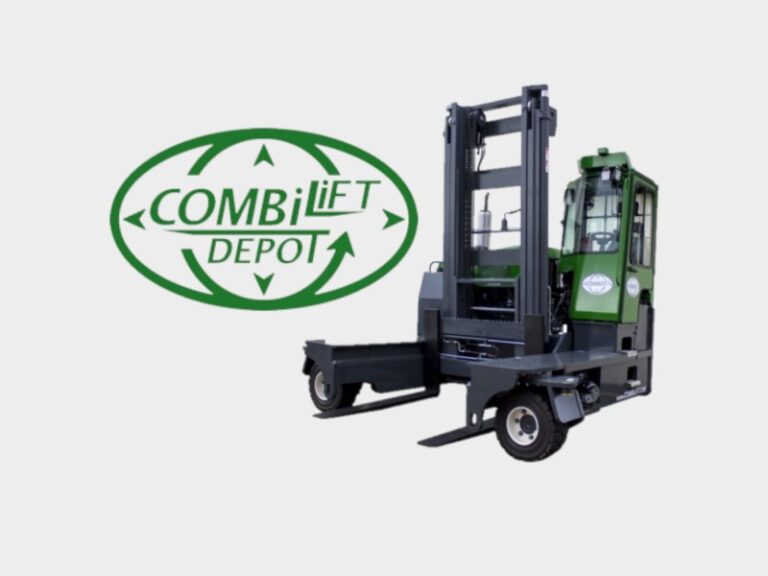
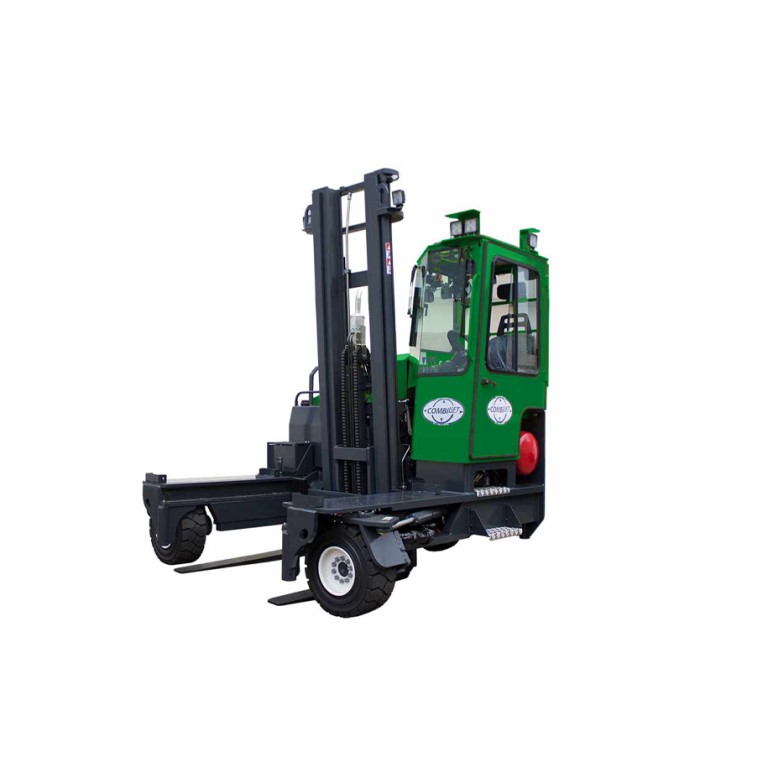
The C-Series forklift range provides a direct solution to one of the most persistent challenges in material handling: moving long and bulky loads through limited space. Traditional forklifts face limits when carrying beams, piping, sheet goods, or other extended materials. The C-Series design eliminates these limits by combining three machines in one. Operators move forward, backward, and sideways, giving them control in environments that restrict conventional trucks.
Design Philosophy
The foundation of the C-Series rests on three principles: versatility, safety, and efficiency. By integrating the capabilities of a sideloader, counterbalance truck, and narrow-aisle forklift into a single unit, the series reduces the need for multiple machines. This design simplifies fleet management, reduces operator training demands, and maximizes available floor space.
The frame and chassis are engineered for stability under long loads. Multi-directional steering ensures precise movement, while a low platform allows materials to remain balanced without shifting. The cab is designed with visibility in mind, reducing blind spots and supporting safe navigation in busy environments.
Load Capacities and Configurations
The C-Series covers a wide range of load requirements.
-
Light to medium duty: models beginning at 2,500 kg capacity are ideal for smaller warehouses and indoor operations.
-
Heavy duty: options scale up to 25,000 kg, supporting industries that move oversized beams, containers, or fabricated modules.
-
Custom builds: specialized configurations extend beyond standard specifications for operations requiring unique dimensions or powertrain adjustments.
Power sources include diesel, LPG, and electric. This flexibility enables operators to match energy requirements to operating conditions. Indoor facilities benefit from clean electric power, while outdoor applications use robust diesel or LPG engines.
Industry Applications
Timber and Lumber
In timber yards, space is often consumed by the turning radius of conventional trucks. The C-Series solves this by traveling sideways, moving long boards and beams directly into racks without repositioning. This increases usable storage by reducing aisle width requirements.
Metal Fabrication
Steel stock, pipes, and heavy plates demand careful handling. The C-Series accommodates these loads with stability and controlled maneuvering. Operators transport steel tubing through narrow gates, stack bar stock efficiently, and place sheet steel into racks with precision.
Construction Materials
From roof trusses to precast panels, construction supply companies rely on equipment that can handle awkward loads quickly. Multi-directional steering reduces the need for repeated adjustments, allowing operators to load flatbeds directly and improve delivery turnaround times.
Warehousing and Logistics
Facilities that store both pallets and oversized materials often invest in multiple trucks. The C-Series combines these roles into one. Palletized goods are moved with counterbalance capability, while long loads are carried sideways through the same aisles. This integration reduces fleet size and maintenance costs.
Expanded Features
Multi-Directional Steering
At the core of the C-Series lies a steering system that shifts between forward, sideways, and crab steering modes. Operators adjust direction with a simple switch, eliminating wasted movements and protecting products from collision.
Operator Comfort
Cab design prioritizes ergonomics. Adjustable seating, intuitive controls, and visibility across the load improve operator focus. Reduced strain results in fewer errors and longer sustained productivity.
Chassis Strength
The reinforced chassis supports the demands of continuous multi-shift work. A long wheelbase increases load stability, while a low center of gravity enhances safety during transport.
Safety Enhancements
-
Overhead guards protect operators during high stacking.
-
Warning systems integrate with facility safety protocols.
-
Reduced reversing limits blind spot incidents.
Comparison with Other Combilift Models
Combilift manufactures a diverse portfolio, each tailored to specific applications.
-
Combi-CB — compact counterbalance unit for mixed pallet and long loads.
-
Combi-SL — sideloader series, optimized for timber and steel yards.
-
Combi-GT — stand-on sideloader designed for quick loading cycles.
-
Combi-ST — stand-on truck for extremely narrow aisles.
-
Pedestrian Range — walk-behind models for high-traffic facilities with tighter safety requirements.
The C-Series remains the most versatile, bridging gaps across industries and reducing the need for dedicated specialty machines.
Benefits in Numbers
The following chart highlights operational differences between conventional forklifts and the C-Series:
| Feature | Conventional Forklift | C-Series Forklift |
|---|---|---|
| Turning radius | Wide | Narrow / Multi-directional |
| Machines required per site | 2–3 | 1 |
| Typical load length handled | Up to 8 ft | 20+ ft |
| Storage utilization | Limited | Maximized |
| Operator visibility | Restricted | Enhanced |
| Power options | Diesel/LPG | Diesel/LPG/Electric |
The chart demonstrates how the C-Series transforms storage layouts and simplifies fleet planning.
Technical Data and Custom Options
Technical specifications vary by model, but shared characteristics include:
-
Hydraulic systems designed for precision load placement.
-
Multiple mast height options for stacking in tall racking systems.
-
Solid or pneumatic tires tailored to indoor or outdoor ground conditions.
-
Attachments for clamps, forks, and specialty grips.
Custom options ensure that each truck aligns with the specific challenges of the operating environment.
Case Scenarios
Timber Supplier in Texas
A supplier previously used three trucks: a sideloader, a counterbalance, and a narrow-aisle unit. Replacing them with a C-Series reduced annual maintenance costs by 30% and freed 15% additional warehouse space by narrowing aisles.
Steel Fabricator in Illinois
Operators moved 30-foot beams through tight gates daily. With conventional trucks, multiple repositioning steps risked damaging products. The C-Series moved beams directly through the gates, reducing loading time by 40%.
Construction Supply Yard in Florida
Large roof trusses required multiple handlers. The C-Series allowed single-truck transport, increasing throughput by 25% and reducing labor requirements.
Maintenance and Support
The C-Series is designed for long service life, but routine maintenance ensures reliability.
-
Hydraulic systems are checked regularly for leaks and pressure consistency.
-
Tires are reviewed for wear patterns that affect stability.
-
Steering components are adjusted to preserve directional precision.
-
Safety sensors are tested to remain compliant with industry standards.
Parts and servicing are supported through a global network of Combilift partners. Downtime is minimized through rapid parts supply and localized expertise.
Environmental Considerations
Sustainability goals shape material handling decisions. Electric C-Series models support indoor use with zero emissions at the point of operation. Diesel and LPG units continue to serve outdoor and heavy-duty roles, but manufacturers provide engines that meet modern emissions standards. By offering multiple power sources, the C-Series aligns with regulatory requirements across regions.
Future Direction
Material handling continues to evolve. Demand for space optimization and safe, efficient equipment will only increase as industrial real estate costs rise. The C-Series continues to adapt through updated controls, enhanced operator technology, and integration with facility management systems.