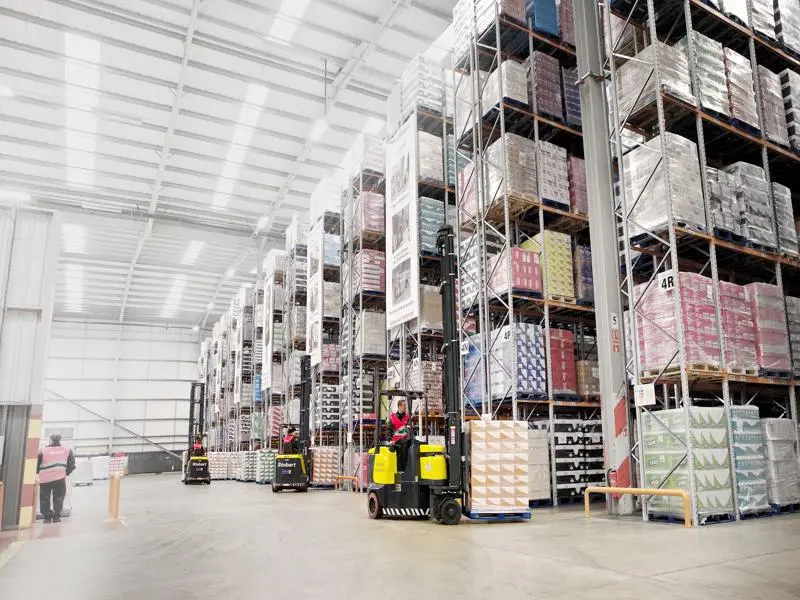
Growing SKU counts, rising facility costs, and next‑day delivery expectations have made conventional warehouse layouts feel restrictive. Pallet positions are valuable, travel time steals capacity, and every aisle consumes space that could hold inventory. Aislemaster Forklifts provide a direct path to higher storage density and faster handling inside the same footprint by combining articulation, stability, and multi‑purpose capability in a single truck family.
This page presents a practical view of how Aislemaster improves space, safety, and throughput; where each model fits; and how to plan a conversion from wide‑aisle to narrow‑aisle operations with minimal disruption. Links throughout point to detailed product pages for specification‑level research.
Why Aislemaster for modern warehouses
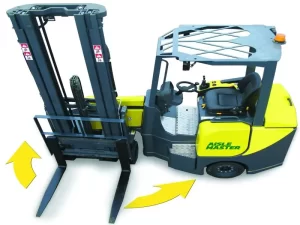
Consolidating equipment, shrinking aisle widths, and reducing unproductive travel change the economics of storage. Articulated trucks turn inside the aisle, reach higher racking efficiently, and handle dock‑to‑rack movements without swapping machines at the threshold. The approach reduces touches and shortens cycle time.
Key outcomes achieved with Aislemaster forklifts:
- More pallets within the same cube by using narrower aisles and deeper racking plans.
- Fewer truck types in the fleet because one articulated truck performs yard interface, dock work, and in‑aisle storage.
- Cleaner energy choices with electric options for indoor applications and LPG for continuous, mixed environments.
- Consistent operator experience across models, simplifying training and reducing error rates.
Product family overview
Three core platforms cover the majority of distribution and manufacturing use cases:
AC Electric Aisle Master
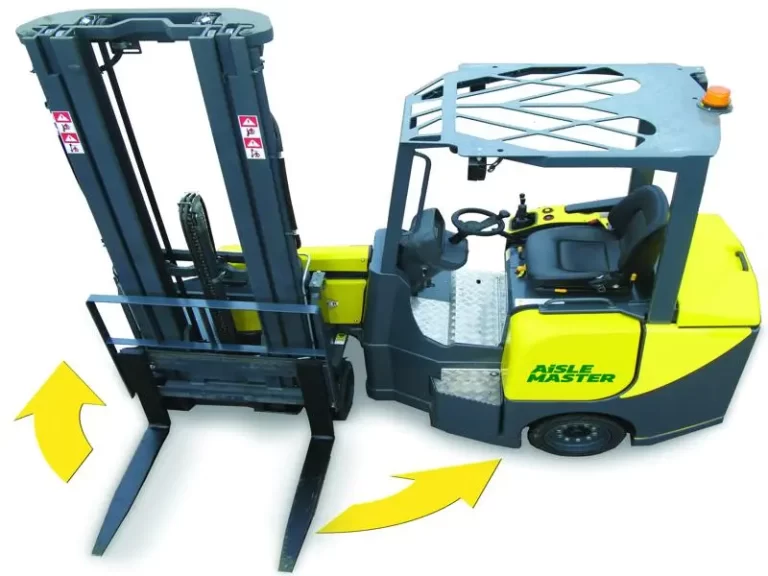
The AC Electric Aisle Master articulated narrow‑aisle forklift supports high‑utilization indoor facilities where emissions, noise, and total energy cost matter. AC drive and lift deliver precise control, smooth acceleration, and predictable braking. Battery swaps or opportunity charging integrate with multi‑shift schedules, and enclosed components reduce contamination in food, beverage, and pharma environments.
Where it fits
- Food, beverage, and pharmaceuticals.
- Ambient and temperature‑controlled storage.
- High rack utilization with repeatable travel paths.
What it changes
- Quiet operation that improves communication in picking and staging zones.
- Lower routine maintenance compared with traditional DC or IC trucks.
- Stable, confident maneuvering inside narrow aisles with clear mast visibility.
Aisle Master LPG
The LPG‑powered Aisle Master for mixed indoor–outdoor work suits sites that need continuous availability, quick refueling, or occasional yard interface. Hydrocarbon fuel supports long, uninterrupted shifts, while robust chassis and tires handle rough surfaces around loading bays and canopies.
Where it fits
- Manufacturing plants with dock‑to‑aisle moves throughout the day.
- DCs that touch outside yards and covered loading areas.
- Facilities valuing rapid refuel cycles without battery infrastructure.
What it changes
- Smooth transition from exterior staging to interior racking without swapping assets.
- Strong performance for heavier pallets or demanding gradients.
- Resilience for mixed conditions while still navigating tight aisles.
Aisle Master Order Picker
The Aisle Master high‑level order picker brings articulated agility to case and each picking. Elevated, secure operator positioning pairs with precise truck control to reach SKUs quickly at multiple levels, reducing travel and touches per order.
Where it fits
- E‑commerce fulfillment and retail replenishment.
- SKU‑rich storage where accessibility at height drives service levels.
- Facilities that want one platform for pallet handling and order selection.
What it changes
- Direct access to pick faces at height without relying on separate machines.
- Faster cycle times in waves and batch picking.
- Compact turning that preserves slot density.
Chart: Model‑to‑Use‑Case Fit
| Aislemaster model | Primary energy | Best suited for | Distinct advantage |
|---|---|---|---|
| AC Electric Aisle Master | Electric | Clean, high‑utilization indoor storage | Low operating energy, quiet precision in narrow aisles |
| Aisle Master LPG | LPG | Mixed indoor/outdoor workloads | Quick refuel, strong performance across surfaces |
| Aisle Master Order Picker | Electric | High‑level case/each picking | Elevated access with articulated maneuverability |
Narrow aisle design that lifts capacity
Storage density rises when aisles contract and racking extends vertically. Articulation allows trucks to enter, align, and place pallets without wasting width for outside turning radii. The effect is straightforward: more pallet positions per bay and more bays per block.
Layout levers that create space
- Reduce aisle width while maintaining operating clearance for safe travel and placement.
- Extend racking height where slab, sprinklers, and reach allow.
- Convert dead zones at end‑aisle and corners into active positions.
- Align pick faces for the order profile to limit cross‑aisle travel.
Handling levers that add throughput
- Consolidate dock‑to‑rack moves into single runs.
- Sequence replenishment and picking to avoid contention.
- Use consistent truck geometry across shifts to standardize timing and slot design.
The combined impact is visible on a simple map: shorter routes, fewer hand‑offs, and higher storage per square foot.
Safety and ergonomics built into the geometry
Operator confidence affects productivity and product protection. Aislemaster designs focus on predictable control, visibility, and seating that reduces fatigue over long shifts.
- Clear sightlines along the mast and carriage for precise fork placement.
- Responsive steering and smooth lift‑lower functions for tight environments.
- Stable stance and chassis design tuned for articulated work inside racking.
- Cab comfort that includes supportive seating, logical controls, and low vibration.
These factors shorten the learning curve, keep cycle times consistent, and reduce incidental damage to racking or loads.
Energy strategy: choosing the right power profile
Energy selection aligns with duty cycle, environment, and infrastructure. Electric lowers noise and eliminates site emissions in the aisle. LPG supports non‑stop shifts where refueling speed is a priority.
Electric profile
- Best for long, repeatable routes inside clean environments.
- Opportunity charging or fast‑swap batteries keep utilization high.
- Reduced consumables and simplified routine maintenance.
LPG profile
- Consistent output for heavy loads and mixed gradients.
- Rapid refueling with minimal schedule impact.
- Ready for locations without charging networks or with frequent outdoor transitions.
Both paths benefit from articulated efficiency, so the decision reduces to shift length, infrastructure readiness, and environmental policy.
KPI framework: measure the gains that matter
A move to articulated narrow‑aisle trucks should show up quickly in core metrics. Track the following to validate gains and tune the plan.
- Pallet positions per square foot: direct indicator of storage density.
- Travel distance per task: proxy for cycle time and energy use.
- Touches per order: fewer hand‑offs mean fewer opportunities for damage and delay.
- Lines picked per labor hour: key signal for order fulfillment.
- Unplanned downtime: maintenance plus damage‑related stoppages.
With consistent data capture, incremental changes to slotting, speeds, or sequencing compound into large annual benefits.
Chart: Space Gain vs. Aisle Width (Illustrative)
This chart illustrates how reducing aisle width increases available storage positions. Values are representative for demonstration and planning conversations.
| Aisle width scenario | Relative pallet positions | Relative travel distance per task |
|---|---|---|
| Conventional wide‑aisle | 1.00× | 1.00× |
| Moderately narrow aisle | 1.20× | 0.90× |
| Narrow aisle with articulation | 1.35× | 0.82× |
The directional relationship remains the same across building types: narrower aisles raise capacity and shorten travel provided truck geometry and visibility are suited to the plan.
Implementation playbook: from assessment to live traffic
A structured rollout keeps operations stable while the layout shifts. The following sequence limits risk and keeps stakeholders aligned.
1) Operational assessment
Map current flows from inbound to outbound. Identify docks that connect to racking zones routinely; measure average queue length at conversion points where traditional fleets swap from counterbalance to reach trucks. Establish baseline performance for travel distance, touches per order, and lines per labor hour.
2) Layout and slotting design
Using racking drawings, validate slab loading, height allowances, and sprinkler clearances. Model new aisle widths and slotting that match SKU velocity. Place fast‑moving SKUs at ergonomic heights near cross‑aisle connectors; position reserve pallets to shorten replenishment runs.
3) Truck selection and energy plan
Choose between AC Electric Aisle Master articulated narrow‑aisle forklift and LPG‑powered Aisle Master for pallet handling, and align Aisle Master high‑level order picker capacity with pick‑face heights. Confirm charger locations or LPG storage compliance.
4) Safety and traffic rules
Define one‑way aisles where geometry suggests it, set overtaking rules, and mark staging buffers outside pick tunnels. Create a simple visual language: floor decals for direction, rack labels for pick zones, and clear limits for speed and horn use.
5) Training and dry runs
Introduce operators to control feel, mast visibility, and articulation in a closed, marked course before entering live aisles. Run simulated putaway and retrieval cycles with mixed pallet weights. Include order picker drills for elevation, platform positioning, and barcode confirmation.
6) Phased go‑live
Convert a single block of racking to the new aisle width and slotting first. Validate timing, congestion points, and real‑world clearances. Expand in planned waves until the entire zone reaches target density and flow.
Use‑case snapshots across industries
Retail and e‑commerce distribution
SKU counts change quickly in omni‑channel operations. Articulation lets storage grow without adding buildings, while the Aisle Master high‑level order picker raises pick‑face reach to keep small‑parcel orders moving. Combining pallet handling and order selection on a unified platform simplifies training and scheduling.
Food and beverage
Large volumes and strict rotation rules benefit from repeatable paths and gentle load handling. The AC Electric Aisle Master articulated narrow‑aisle forklift lowers noise in ambient and cold environments, and sealed components support hygiene practices.
Manufacturing and work‑in‑process
Material flows from goods‑in to line‑side staging to finished goods. The LPG‑powered Aisle Master for mixed indoor–outdoor work moves comfortably between exterior yards and interior racks, cutting out fleet swaps that previously added minutes to every move.
Third‑party logistics (3PL)
Client requirements differ by account, but aisle geometry and truck controls remain constant. Cross‑trained drivers move fluidly between zones, and a shared parts and service profile keeps support simple across the site.
Cost structure: where savings accrue
Density and cycle time drive cost per shipped unit. The following areas typically deliver visible savings after conversion.
- Facility: higher storage in the same box defers expansions and reduces external overflow leasing.
- Fleet: fewer truck types and standardized parts lower capital and inventory carrying cost for spares.
- Labor: shorter travel and fewer touches allow more lines per hour with the same headcount.
- Energy/Fuel: steady, predictable consumption with electric or efficient LPG profiles.
- Damage: better visibility and control reduce product and rack incidents.
Chart: Five‑year cost impact model (Illustrative)
| Cost component | Before (wide‑aisle mix) | After (Aislemaster narrow‑aisle) | Directional change |
|---|---|---|---|
| Fleet count and variety | High | Lower | Fewer platforms required |
| Energy/Fuel per shift | Variable | Predictable | Smoother consumption profile |
| Maintenance and spares | Disparate | Standardized | Simplified support |
| Facility space cost | Rising | Deferred | More storage in same footprint |
| Damage and rework | Intermittent | Reduced | Better visibility and stability |
The model assumes the same outbound volume. Gains come from geometry, platform consolidation, and consistent operator experience.
Order fulfillment with elevation and control
Direct access to higher pick faces changes pick path math. With the Aisle Master order picker platform, elevated operators reach SKUs quickly, scan, and confirm while maintaining stable control of the truck. Batch, zone, and wave strategies all benefit because each stop includes more reachable items.
- Expanded accessible pick faces per stop.
- Fewer trips to ground‑level replenishment zones.
- Less congestion in popular aisles when pickers can select at several levels.
Slotting rules adapt as well: heavy items remain at ergonomic heights, but medium and light SKUs shift upward because they remain reachable in a single stop.
Maintenance practices that protect availability
Availability determines practical capacity. A simple maintenance rhythm keeps trucks ready for shifts without surprises.
- Visual walk‑arounds at shift start with documented checkpoints.
- Tire, mast, and chain inspections at defined hour intervals.
- Battery care plans for electric units, including charging windows and temperature management.
- LPG safety routines covering cylinder handling and storage.
Partner support and access to parts for the Aislemaster family shorten turnaround times when planned service or repairs are due.
Data and telematics options
Connecting trucks to a site’s WMS or telematics platform produces the data needed to manage performance by exception.
- Hour‑meter data for preventive maintenance scheduling.
- Impact sensing to identify locations or shifts with higher incident rates.
- Operator access control for certification management.
- Utilization tracking to balance fleets across zones and shifts.
Even simple dashboards showing utilization vs. idle time often uncover quick wins within a week of monitoring.
Training program outline for consistent results
A clear training ladder keeps operators confident and safe while preserving equipment.
- Controls and visibility: seated posture, mast sightlines, articulation feel, and emergency procedures.
- Low‑speed precision: slow‑roll alignment, fork placement, and pallet engagement without side contact.
- In‑aisle maneuvers: entry, alignment, lift, and exit with spotters during early sessions.
- Mixed workload drills: dock loading, cross‑docking, and yard interface for LPG models.
- Order picking elevation: platform positioning, scanning at height, and stable descent routines.
Refresher sessions after the first month help lock in best practices once live traffic introduces realistic complexity.
Change management: engaging stakeholders
Successful conversions align operations, facilities, safety, and finance from the outset.
- Operations defines KPIs and owns day‑to‑day execution.
- Facilities validates racking, slab, and sprinkler constraints.
- Safety shapes traffic rules and training cadence.
- Finance models cash flow and tracks realized savings against plan.
Short weekly stand‑ups during rollout keep feedback loops tight and maintain momentum.
Example site blueprint (conceptual)
- Inbound: staging lanes sized for average hourly receipts, with clear merge into putaway routes.
- Reserve: tall racking blocks with narrow aisles and defined one‑way flow.
- Pick tunnels: medium‑height faces for fast movers and safe passing clearances.
- Outbound: cross‑dock lanes and trailer queues that match peak shipping windows.
- Charging or LPG area: positioned near travel hubs without interfering with live traffic.
This blueprint reduces cross‑currents, keeps trucks moving, and lets supervisors manage exceptions rather than firefight congestion.
Sustainability notes
Electric trucks help reduce on‑site emissions and noise, which supports employee wellness and compliance goals. Longer component life and efficient power use lower waste. LPG remains a sound option for continuous duty or mixed environments, and both power paths take advantage of articulation to minimize unnecessary travel.
How Aislemaster supports the full journey
From scoping to go‑live, support covers layout review, product selection, and training resources aligned to the chosen mix: AC Electric Aisle Master articulated narrow‑aisle forklift, LPG‑powered Aisle Master, and Aisle Master high‑level order picker. A consistent control philosophy across the family eases onboarding and keeps productivity steady as teams adopt narrow‑aisle best practices.
Frequently asked planning questions
How narrow can aisles go?
Final width depends on pallet size, load stability, rack design, and clearance policies. A site study and trial run confirm the safe working envelope.
Can one truck handle docks and aisles?
Yes, that is the intent behind articulated geometry: one platform manages dock interface and in‑aisle storage to reduce hand‑offs.
What about cold storage?
Electric configurations perform well in temperature‑controlled spaces with appropriate battery and component considerations. Sealed systems support hygiene and condensation management.
How long does operator training take?
Most operators adapt quickly because controls are intuitive and visibility is strong. A structured plan with supervised sessions accelerates confidence.
Is LPG still relevant where electrification targets exist?
Many facilities run mixed fleets while charging networks scale. LPG provides consistent output and fast refueling for long, uninterrupted shifts or where outdoor segments are part of daily work.
Next steps
Explore the product pages, assemble the duty‑cycle profile, and map the first conversion block. For specification details and configuration options, start with:
- AC Electric Aisle Master articulated narrow‑aisle forklift
- LPG‑powered Aisle Master for mixed indoor–outdoor work
- Aisle Master high‑level order picker
To learn more about the company, visit the Aislemaster forklifts homepage for additional resources, case insights, and contact options.