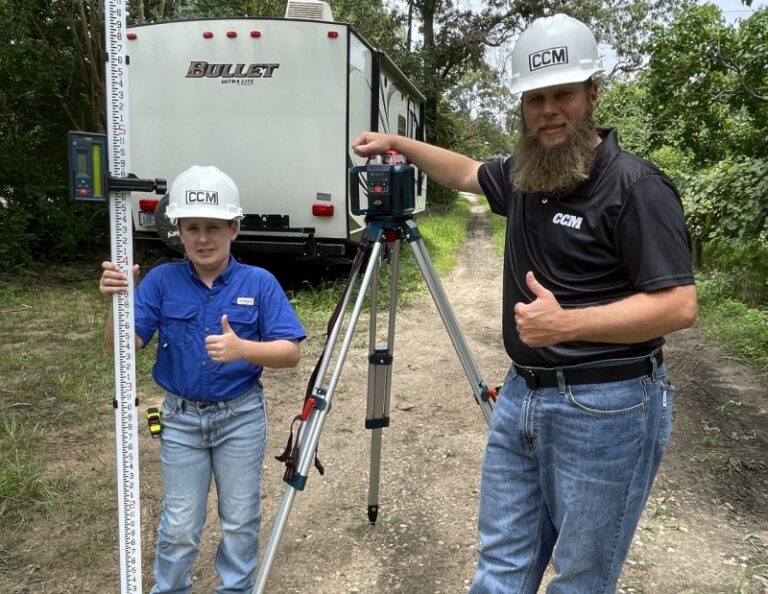

I’m Brian Gillespie, owner‑operator of Concrete Contractor Magnolia (CCM Concrete). Every slab we pour on FM 1488 or in the tree‑lined streets of Westwood Village shares one goal: give families a safe, crack‑free path from driveway to porch for decades. The article below dissects my entire workflow, from soil testing to final broom stroke, so you’ll know exactly what separates a durable concrete walkway from the brittle strips you see buckling after the first Texas summer. Read with a critical eye; then decide if professional help suits your timeline, budget, and stress threshold.
1 Why Magnolia Homeowners Replace Walkways Instead of Patching Cracks
Red ironstone soils swell hard when autumn rains roll in, then shrink under August heat. Repeated movement fractures rigid concrete. Tree roots chase limited water, lifting edges. When a slab trips visitors or funnels water toward the foundation, replacing the run with a purpose‑built walkway saves ankles and siding. I build each path to match Magnolia’s clay profile and Montgomery County’s drainage codes rather than hope another layer of caulk solves the problem.
2 Site Assessment and Soil Preparation
Before forms ever hit the yard, I dig a moisture‑index pit and perform a Dynamic Cone Penetrometer tap test. Numbers below 4 mm per blow show soil strong enough for a simple 4‑inch base. Anything looser? I excavate deeper, fill with crushed limestone, and compact to 95 percent Modified Proctor density. Clients often ask, “Can I skip the sub‑base?” Skipping leads to differential settlement and spiderweb cracks. That choice costs more long term than doing it right now.
3 Permitting in Magnolia and Nearby HOAs
-
City of Magnolia: Flatwork permit, base inspection, and final pour sign‑off.
-
Montgomery County ETJ: No municipal permit, but county inspectors verify culvert slope at the ROW.
-
HOAs (High Meadow Ranch, Sendera Ranch): Color chips or texture samples must appear in the architectural packet. We file paperwork for you and attend committee meetings when schedules align.
Keeping inspectors happy removes stop‑work orders that derail schedules.
4 Forming Walkway Geometry
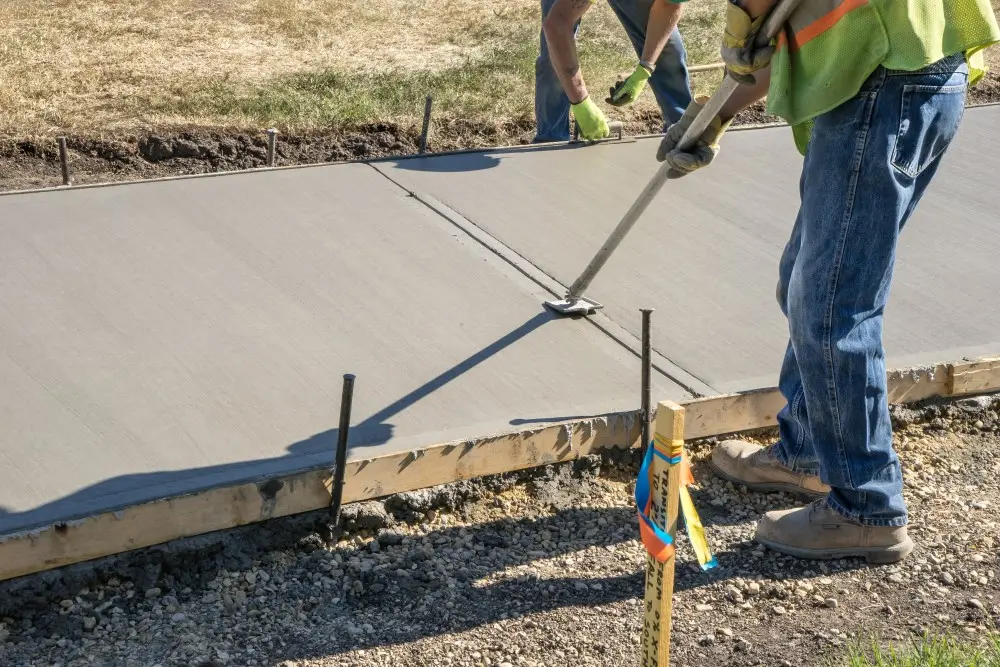
I stake grade at quarter‑inch per foot pitch away from structures. Forms sit on ¾‑inch hardwood stakes, topped with string lines so the edge stays true while concrete pressures build. Whenever a path meets an existing driveway, I drill ½‑inch holes at 12‑inch centers, epoxy dowels, and tie new rebar to old—so slabs move together.
Quick check: If your current contractor never mentions dowels, keep interviewing.
5 Reinforcement Options
| Reinforcement | Purpose | Recommended Use |
|---|---|---|
| #3 Rebar @ 18 in o.c. | Handles tension in bends | Standard residential walkways |
| 6×6‑W2.9 Mesh | Restrains shrinkage cracks | Straight runs under 4 ft wide |
| Macro‑Synthetic Fibers | Controls plastic cracking | Sidewalks near pools where steel poses rust risk |
| Dowels | Tie new slab to existing | Driveway approach or porch tie‑in |
The right bar does more than beef up strength; correct spacing reduces curling that makes toes catch on corners.
6 Concrete Mix Design
I specify 3,500 psi at 28 days, 5 percent air entrainment, and 0.45 water‑cement ratio. Fly ash replacement runs around 20 percent to cut heat of hydration. Slump stays near 4 inches so the crew can broom texture before bleed water evaporates. Magnolia’s humidity lengthens set time, so I keep hydration blankets on standby.
7 Pour Day Sequence
-
Final base soak—dust‑free surface drinks a fine mist.
-
Truck arrival—batch plant on FM 1774 hits our site in under 25 minutes; ticket checked for mix design.
-
Placement—crews chute into forms, vibrate edges only.
-
Strike‑off—magnesium screed pulls to string lines.
-
Float & edge—bull float brings paste, edging tool rounds corners.
-
Control joints—1 ¼‑inch depth, max spacing 5 ft or sidewalk width × 2.
-
Texture—soft broom perpendicular to foot traffic ensures grip.
Each technician knows their station, eliminating delays that lead to cold joints.
8 Curing and Early Maintenance
I spray a clear membrane‑forming compound once sheen fades. We leave forms in place 24 hours, backfill with topsoil, and advise foot traffic after 48 hours. Vehicle crossings wait seven days. Asking kids to detour protects your investment.
9 Cost Variables—Understanding the Chart Above
The bar chart displays average finished cost per linear foot for 4‑ and 5‑foot‑wide walkways in Magnolia. Notice the price climb as width increases. Material jump alone explains most of it; formwork widens and rebar count rises. Labor remains fixed per pour hour, so widening by one foot doesn’t double crew time.
Curious which width fits your frontage? Measure gate clearances and stroller wheelbases, then consider resale appeal.
10 ADA and Universal Design Considerations
Even private paths benefit from 60‑inch passing zones every 200 feet, 2 percent cross slope, and tactile indicators at street crossings. Parents pushing strollers enjoy the same advantage as residents using mobility devices. I integrate those specs by default unless clients instruct otherwise.
11 Surface Finishes Without Slip Hazards
-
Light broom: Standard choice, leaves micro‑grooves.
-
Seeded aggregate: Pea gravel broadcast, lightly bull‑floated, then pressure sprayed; offers traction and subtle color.
-
Salt finish: Coarse rock salt pressed into fresh paste, washed out next morning; creates small pocks to mimic limestone.
I avoid slick trowel finishes on walkways. Magnolia’s rainstorms and humidity invite moss; traction matters.
12 Integrating Walkways With Existing Hardscape
A walkway unifies driveway apron, porch steps, and garden paths. Alignment lines matter. I run a laser from curb to front door and mirror angle on planters or sitting areas. If existing concrete carries integral color, I order matching pigment by weight. Lighter broom finishes blend shades after two weeks of sun bake.
13 Service Area Boundaries
We pour in:
-
Magnolia city limits
-
Indigo Lake Estates
-
Montgomery Trace
-
Decker Prairie
-
Stagecoach
-
The Woodlands fringe north of Egypt Ln
Check the interactive map on our service‑area page for your ZIP.
14 Common Questions I Hear at Kitchen Tables
How thick is your base layer?
Four inches of compacted crushed limestone in Magnolia’s clay belts; six if soil test fails.
Can you pour during winter?
Yes, with heated blankets and accelerator admixture when temps dip below 40 °F.
Will a four‑inch slab crack?
All concrete cracks; correct joint spacing controls location and aesthetics.
Do I need rebar on a small garden path?
If traffic stays pedestrian only, wire mesh suffices, yet rebar adds marginal cost for peace of mind.
Can you match stamped driveway texture?
Yes, we cast texture mats from the same manufacturer and tint release powder to blend.
How soon can I landscape next to the slab?
Backfill next day; plant root balls after seven days once edges cure.
What grade of sealer do you use?
Silane‑siloxane penetrating at 10 percent solids—reapply every three years.
Why are fiber additives not enough by themselves?
Fibers control micro‑cracks but offer little tensile strength; steel remains king for structural integrity.
Do you haul debris?
Yes, demo spoils leave site same day.
Will pouring raise my property taxes?
Typically no—walkways fall under hardscape maintenance, not new living area.
15 DIY vs Hiring a Professional
Spending weekends setting imperfect forms leads to low spots and lumpy edges. Rental mixers struggle to keep paste temperature down in Texas sun. My crew finishes a 40‑foot walk in half a day, cleans yard, and leaves joints saw‑cut to spec. When comparing bids, ask sellers to include:
-
Soil excavation depth
-
Base compaction density target
-
Reinforcement schedule
-
Joint layout diagram
-
Cure method
Transparency shows competence.
16 Step‑by‑Step Overview of My Walkway Contractor Process
| Phase | Duration | Client Role |
|---|---|---|
| Consultation & quote | 30 min | Approve design sketch |
| Permitting & HOA | 3–7 days | Sign forms I prepare |
| Excavation & base | 1 day | Mark sprinkler lines |
| Form & rebar | ½ day | Inspect layout |
| Pour & finish | ½ day | Provide hose water |
| Curing | 7 days | Keep pets off slab |
Breadcrumb updates land in your inbox nightly so you never wonder what happens next.
17 Call Me Before the Next Rainstorm
Walkway hazards grow when clay swells overnight. A quick phone call or the form on my walkway contractor page schedules a no‑cost inspection. Bring tape measurements and a goal; I’ll supply soil probes and a fair quote. Together, we’ll pour a path that keeps shoes clean, ankles safe, and Magnolia pride glowing under porch lights.